



2026 Best Foot Pedal Valve for Global Buyers?
Choosing the best Foot Pedal Valve in 2026 requires more than comparing prices and product photographs. Global buyers must examine pressure ratings, port sizes, body materials, seal compatibility, flow direction, and operating temperature. A valve that performs smoothly in a clean workshop may struggle beside metal dust, oil mist, or frequent washdown cycles. Small details matter.
Fluid-power specialist Frank Yeaple offers a useful principle: “Select the valve for the circuit, not for its appearance.” This idea remains important when reviewing pneumatic and hydraulic foot-operated controls. Buyers should verify whether the pedal provides momentary or maintained operation. They should also check return-spring force, mounting-hole spacing, response feel, and replacement-part availability. Specifications deserve evidence.
Real experience can expose weaknesses. A compact aluminum valve may feel excellent during a short test, yet its pedal hinge could loosen after thousands of cycles. No shortlist is perfect. I would still question any supplier promising universal compatibility without providing test conditions, drawings, and certification details. Reliable manufacturers explain performance limits clearly. They publish pressure data and identify seal materials. They also support installation guidance and after-sales service.
This guide compares leading Foot Pedal Valve options for international purchasing teams, maintenance departments, machine builders, and distributors. It considers practical usability, technical reliability, sourcing transparency, and long-term operating value. Regional standards and buyer requirements may differ. Therefore, readers should confirm final specifications with the manufacturer before ordering. The strongest choice is rarely the cheapest one. It is the valve that fits the circuit, survives the environment, and remains serviceable when production cannot stop.
What Is a Foot Pedal Valve and How Does It Work?
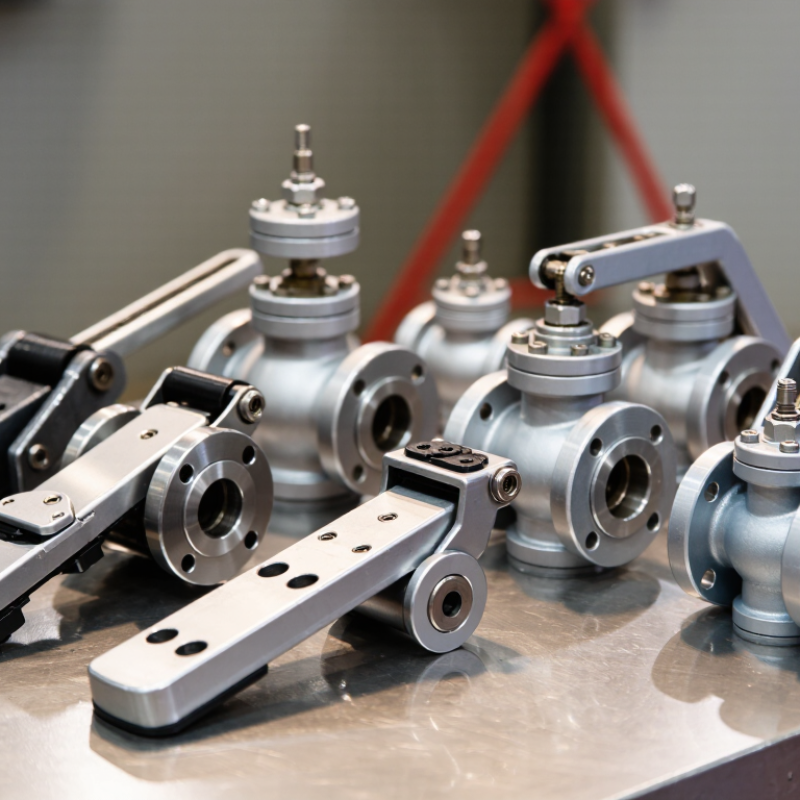
A foot pedal valve is a pneumatic control device operated by pressing a pedal. It changes airflow without requiring the operator’s hands. Inside, a spool shifts between ports. Compressed air then moves toward, or away from, an actuator. A spring usually returns the spool when the foot is released. Some models hold position mechanically. Others return immediately.
The circuit type matters. A 3/2 valve commonly controls a single-acting cylinder. A 5/2 valve usually operates a double-acting cylinder. Port size, operating pressure, flow rate, and thread standard affect performance. Check them carefully. A valve rated for 8 bar may still perform poorly with undersized tubing. In practical commissioning, slow cylinder movement often comes from exhaust restriction, not valve failure. That assumption is risky.
Automation demand keeps rising. The International Federation of Robotics reported 541,302 industrial robots installed worldwide in 2023, a 10% annual increase (World Robotics 2024). More automated cells create demand for simple, reliable manual overrides. However, a foot pedal should not replace proper safeguarding. The U.S. Bureau of Labor Statistics recorded 5,283 fatal work injuries in 2023 (Census of Fatal Occupational Injuries). Buyers should review guarding, accidental activation risks, and reset behavior against ISO 4414 and applicable machinery safety requirements. Wet floors expose another weakness. A small mistake there can become a serious control problem.
2026 Best Foot Pedal Valve for Global Buyers? - What Is a Foot Pedal Valve and How Does It Work?
A foot pedal valve is a manually operated directional control valve activated by pressing a pedal. In pneumatic systems, it routes compressed air to extend, retract, or release an actuator while allowing the operator to keep both hands available.
| Valve Type | How It Works | Typical Ports | Typical Pressure Range | Typical Flow Capacity | Best Application | Key Advantages | Important Buying Considerations |
|---|---|---|---|---|---|---|---|
| 3/2-Way, Spring Return | Pressing the pedal switches one common port between supply and exhaust. Releasing the pedal automatically returns the valve to its original position. | 3 ports and 2 switching positions; commonly G1/8, G1/4, or equivalent NPT sizes. | Commonly 0 to 8 bar or 0 to 10 bar, depending on the construction and manufacturer specification. | Typically suitable for small to medium pneumatic cylinders and control circuits. | Single-acting cylinders, air clamps, blow-off tools, and simple start/stop functions. | Simple operation, automatic return, easy troubleshooting, and a clear safety response when the pedal is released. | Confirm the normal position, exhaust arrangement, pedal guard, required flow rate, and compatibility with the actuator. |
| 3/2-Way, Maintained Position | The pedal remains in the selected position after activation, so the valve stays switched until the operator changes it back. | 3 ports and 2 positions; port sizes often range from G1/8 to G1/4. | Commonly rated up to approximately 8 to 10 bar, subject to the product design. | Generally used for low to medium flow control. | Air supply selection, continuous blow-off, and applications where a constant command is required. | Reduces the need for continuous foot pressure and supports repeated operating cycles. | Not the preferred choice where the valve must automatically return to a safe state after the foot is removed. |
| 5/2-Way, Spring Return | The valve alternates compressed air between the two sides of a double-acting cylinder. A spring returns the spool when the pedal is released. | 5 ports and 2 positions; commonly G1/4 or G1/2 in industrial pneumatic systems. | Often rated from approximately 2 to 10 bar, with minimum pressure depending on spool design. | Medium to high flow capability for faster cylinder movement. | Double-acting cylinders requiring pedal control with automatic return. | Supports forward and reverse cylinder motion, compact manual control, and fast switching. | Check the cylinder volume, desired cycle speed, exhaust flow, return spring force, and required port size. |
| 5/2-Way, Maintained Position | Pressing the pedal shifts the spool and the valve remains in that position until the pedal is moved to the opposite position. | 5 ports and 2 positions; commonly G1/4 or G1/2. | Commonly approximately 2 to 10 bar, depending on the valve series. | Medium to high flow for double-acting actuators. | Clamping, positioning, material handling, and repetitive forward/reverse operations. | Allows hands-free maintenance of the selected actuator direction. | Use additional safeguards where an unintended maintained signal could create a crushing or movement hazard. |
| 5/3-Way, Closed Center | The pedal provides forward and reverse commands. In the center position, the supply, exhaust, and actuator paths are closed according to the valve design. | 5 ports and 3 positions; commonly G1/4 or G1/2. | Often approximately 2 to 10 bar. | Medium flow; the center condition may reduce unwanted actuator movement but does not replace a mechanical brake. | Double-acting cylinders that require a temporary stop or neutral position. | Provides a defined center condition and better operational flexibility than a basic 5/2 valve. | Verify the exact center function and confirm whether the actuator can hold its load under leakage or external force. |
| 5/3-Way, Exhaust Center | When centered, the actuator ports are connected to exhaust while the supply path is closed. | 5 ports and 3 positions; commonly G1/4 or G1/2. | Often approximately 2 to 10 bar. | Medium flow, with a center position that allows the actuator to vent. | Applications where the actuator should be depressurized when the foot pedal is released. | Can reduce trapped air pressure and support a controlled release function. | Do not use where the load must remain mechanically supported after pneumatic pressure is removed. |
| 5/3-Way, Pressure Center | In the center position, both actuator ports are connected to the supply under the valve's defined pressure-center arrangement. | 5 ports and 3 positions; commonly G1/4 or G1/2. | Often approximately 2 to 10 bar. | Medium flow, with center behavior dependent on the internal spool configuration. | Specialized actuator control where equalized pressure is required at the center position. | Can provide a defined pneumatic holding condition for suitable balanced loads. | Requires careful evaluation of cylinder area ratio, load direction, leakage, and possible pressure-induced movement. |
| Panel or Floor-Mount Pedal Valve | The internal directional valve is operated through a pedal mechanism mounted on a machine panel or floor bracket. | Usually available with G1/8, G1/4, G3/8, or G1/2 ports, depending on the body size. | Commonly 0 to 8 bar or 0 to 10 bar for pneumatic versions. | Selected according to port size, spool design, and required actuator speed. | Industrial machinery, workstations, assembly lines, and operator-controlled fixtures. | Hands-free operation, straightforward installation, and easy access for repetitive tasks. | Measure available mounting space and check pedal travel, operating force, guard requirements, and ingress protection. |
| Guarded Safety Foot Valve | A protective guard helps prevent accidental activation. Some designs also use a deliberate two-step or protected pedal action. | Commonly 3/2 or 5/2 pneumatic configurations with G1/4 or equivalent ports. | Typically up to approximately 8 to 10 bar when specified for industrial compressed-air service. | Depends on the selected directional valve and actuator requirements. | Presses, cutting equipment, fixtures, and machinery where unintended pedal operation could be hazardous. | Improves operator protection and helps reduce accidental commands. | It is not automatically a complete safety function. Conduct a machinery risk assessment and use certified safety controls when required. |