
Choosing the best CNC Turning Service in China is not simply a matter of finding the lowest quotation. The right supplier must prove consistent accuracy, clear communication, stable production, and dependable inspection records. A stainless-steel shaft may look simple, yet its bearing fit, surface finish, concentricity, and thread quality can determine whether an entire assembly works. Small details matter.
Quality begins earlier.
W. Edwards Deming, a leading quality-management expert, said, “Quality comes not from inspection, but from the improvement of the production process.” This principle remains highly relevant when comparing Chinese CNC turning manufacturers. A capable factory should show how it controls tool wear, verifies raw materials, manages first-article inspection, and protects tolerances during larger batches. ISO certification can support trust, but certificates alone cannot replace practical evidence. Ask for inspection samples, process photographs, material reports, and realistic delivery records.
This guide examines what separates an ordinary supplier from a reliable CNC Turning Service partner in China. It considers machine capacity, engineering support, tolerance control, pricing transparency, production volume, and after-sales communication. A supplier may offer advanced Swiss-type lathes, but that does not guarantee suitable workmanship. Another factory may respond quickly, yet struggle with complex drawings or changing requirements. That is the uncomfortable part: “best” depends on your component, quantity, material, and risk tolerance. There is no universal winner. Careful comparison is still necessary.
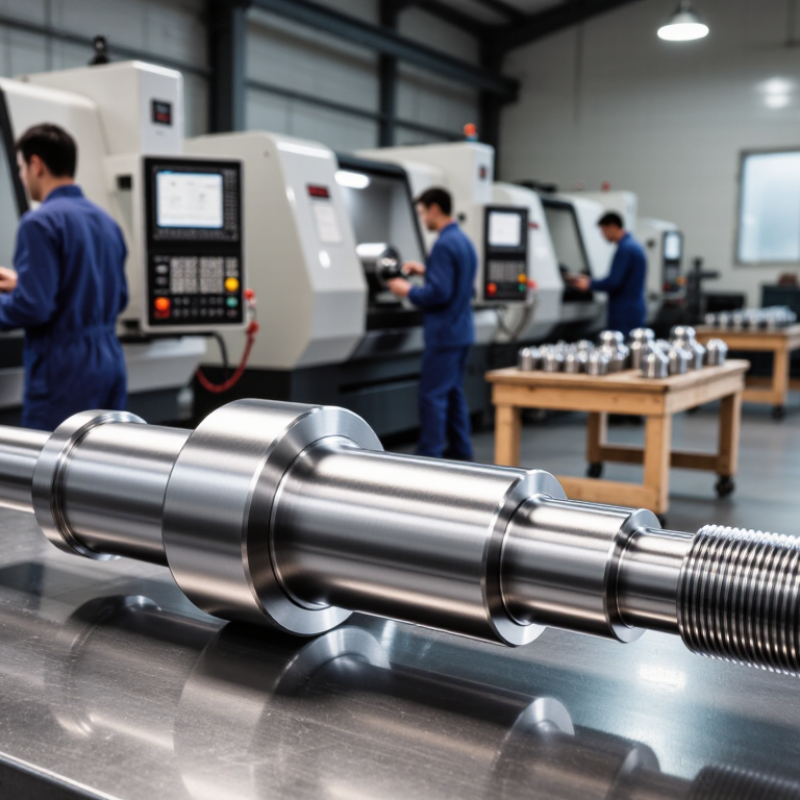
CNC turning is a subtractive manufacturing process for producing round or cylindrical parts. A computer-controlled lathe rotates the workpiece while cutting tools remove material. Common outputs include shafts, bushings, pins, threads, and precision sleeves. The service usually covers programming, material preparation, machining, inspection, and finishing.
In China, a reliable CNC turning service should understand both drawings and production realities. Engineers check tolerances, thread specifications, surface roughness, and material behavior before cutting metal. For example, stainless steel may generate heat during machining, while aluminum often requires careful chip control. Experienced technicians select cutting speeds, tool angles, and coolant methods accordingly. A measured first article can reveal problems before hundreds of parts are produced.
Quality depends on more than machine accuracy. Operators should use calibrated micrometers, gauges, and coordinate measuring equipment. Inspection records also support traceability and consistent delivery. Clear communication matters when a drawing leaves a detail open. A supplier may ask about chamfer sizes, thread fit, or acceptable cosmetic marks. That question can prevent expensive rework.
Not every project runs perfectly. A thin-walled part may distort after clamping, even when the program is correct. That is why practical feedback should influence the design. A capable service provider explains the issue with measurements, photographs, and a workable adjustment. The best choice is not simply the lowest quotation. It is the partner that proves control from raw bar stock to the finished component.
What Is the Best CNC Turning Service in China?
The best CNC turning service depends on measurable capability, not attractive promises. In practical sourcing, evaluate equipment, materials, tolerances, inspection systems, and production capacity. Ask whether the provider regularly machines your required metals, plastics, or technical alloys. Review sample parts with visible threads, clean shoulders, and consistent surface finishes. Small details matter.
Machine capability should match your drawings and volume. Check spindle range, live tooling, automatic bar feeding, and available turning diameters. Request recent inspection reports, calibration records, and material certificates. A reliable provider should explain how it controls first-article inspection and batch variation. Look closely. Do not accept vague claims such as “high precision” without numerical tolerances.
Communication is equally important. Confirm drawing revision control, response times, packaging methods, and delivery planning before placing an order. Ask for a clear quotation separating machining, tooling, finishing, inspection, and shipping costs. A low price can hide weak process control or expensive rework. I have also underestimated communication delays when comparing overseas suppliers. That mistake changed how I assess technical support. A trial order can reveal more than a polished presentation, especially when the supplier documents problems honestly and proposes practical corrections. Reliability grows through evidence, repeatable quality, and transparent discussion.
| Evaluation Dimension | Recommended Target or Reference Value | Evidence to Request | Why It Matters | Priority |
|---|---|---|---|---|
| Dimensional Accuracy | Typical precision turning capability: approximately ±0.005 to ±0.020 mm on controlled features, depending on material, geometry, machine, and inspection method. | Sample inspection reports, capability studies, drawing-based first article inspection, and measurement-system details. | Consistent dimensional control reduces assembly problems, rework, and field failures. | Critical |
| Surface Finish | Common CNC-turned finishes are approximately Ra 0.8–3.2 µm; finer finishes may require additional finishing operations. | Surface-roughness readings, process samples, tooling information, and confirmation of post-processing requirements. | Surface roughness affects sealing, friction, wear, appearance, and fatigue performance. | High |
| Material Capability | Capability should cover the specified material family, such as aluminum alloys, stainless steels, carbon steels, brass, copper, titanium, engineering plastics, or hardened materials. | Material process list, mill certificates, incoming inspection records, and traceability procedures. | Different materials require different cutting parameters, tooling, coolant control, and quality checks. | Critical |
| Machine and Part Size Range | Verify maximum turning diameter, turning length, bar capacity, spindle speed, live tooling, Y-axis capability, and sub-spindle availability against the part drawing. | Current machine list, equipment specifications, machine maintenance records, and representative production samples. | A suitable machine platform improves accuracy, cycle time, repeatability, and cost control. | Critical |
| Inspection Equipment | At minimum, calibrated dimensional tools should be available; complex or tight-tolerance parts may require a coordinate measuring machine, optical measurement, or form measurement equipment. | Calibration certificates, equipment inventory, inspection plans, and sample dimensional reports. | Reliable inspection is necessary to verify conformance rather than relying only on machine settings. | Critical |
| Quality Management System | A documented quality system aligned with ISO 9001 is a useful baseline; regulated industries may require additional sector-specific controls. | Valid certificate, certification scope, internal audit records, corrective-action examples, and documented procedures. | Formal procedures support repeatability, traceability, document control, and corrective action. | High |
| Prototype and Production Flexibility | The provider should demonstrate a defined process for prototypes, pilot batches, low-volume orders, and repeat production without compromising inspection standards. | Sample production plans, tooling strategy, batch-size history, and documented change-control procedures. | The best supplier can support product development as well as stable ongoing production. | High |
| Engineering and Drawing Review | The provider should review tolerances, datum schemes, threads, GD&T, material specifications, surface finish, and manufacturability before quoting. | Marked-up drawing review, design-for-manufacturing feedback, technical questions, and revision-control records. | Early engineering feedback can prevent avoidable cost increases and production defects. | High |
| Lead Time and Delivery Reliability | Evaluate quoted lead time against actual on-time delivery performance. For repeat orders, request historical performance rather than relying only on promised dates. | Production schedule, capacity plan, on-time delivery records, escalation process, and written delivery commitments. | Reliable delivery protects inventory planning, customer commitments, and production continuity. | High |
| Cost Transparency | The quotation should separate machining, raw material, tooling, inspection, secondary operations, packaging, freight, and applicable taxes or duties. | Detailed quotation, assumptions, minimum order quantity, tooling ownership terms, and price-validity period. | Transparent pricing makes supplier comparisons more accurate and reduces unexpected charges. | High |
| Traceability and Documentation | Documentation should identify material batch, production lot, inspection results, drawing revision, and nonconformance disposition where required. | Material certificates, inspection reports, lot records, certificates of conformity, and nonconformance reports. | Traceability supports audits, recalls, root-cause analysis, and regulated applications. | High |
| Secondary Processes | Confirm control of heat treatment, plating, anodizing, passivation, grinding, laser marking, deburring, and assembly when these processes are part of the specification. | Approved-process list, subcontractor controls, treatment certificates, sample approvals, and final inspection records. | Many part failures originate in uncontrolled finishing or treatment operations rather than turning itself. | High |
| Communication and Project Management | A designated technical contact, written clarification process, revision control, and regular progress updates should be available throughout the order. | Communication workflow, response-time expectations, project schedule, and examples of engineering-change handling. | Clear communication reduces misunderstanding across languages, time zones, drawings, and revisions. | High |
| Packaging and Export Readiness | Packaging should protect machined surfaces from impact, contamination, corrosion, and moisture during international transport. | Packaging specification, corrosion-protection method, export documents, shipping terms, and photographs of packed goods. | Proper packaging preserves part quality after production and reduces transport-related damage. | Medium |
Note: The numerical ranges shown are general industry reference values, not universal guarantees. Actual capability depends on part geometry, material, tolerance stack-up, machine condition, tooling, batch size, and inspection method. Confirm all requirements with a drawing review and a first-article inspection before mass production.
China’s CNC turning capability varies sharply between workshops. High-quality suppliers usually combine two-axis lathes, live-tool turning centers, mill-turn machines, and Swiss-type equipment. Bar feeders support stable production for shafts, pins, and medical components. Sub-spindles reduce repositioning errors on complex parts. In-process probing helps control diameter drift during long batches. However, more axes do not automatically mean better accuracy. Process discipline matters more.
The International Federation of Robotics reported 276,288 industrial robot installations in China during 2023. This figure reflects strong automation capacity, but it does not prove every machining supplier uses automation effectively. Buyers should inspect spindle condition, calibration records, tool-life controls, and actual first-article reports.
A capable service provider should explain tolerance capability in micrometers, not only advertise “precision machining.” I have found that response speed and fixture design often influence results more than machine age.
Material selection also separates experienced suppliers. The World Steel Association recorded China’s 2023 crude steel production at about 1.019 billion tonnes. The U.S. Geological Survey reported approximately 36 million tonnes of primary aluminum production in the same year. These supply depths support machining stainless steel, carbon steel, aluminum alloys, brass, and selected nickel-based materials. Yet material availability can hide quality differences. Heat treatment, bar consistency, and residual stress still require verification. A practical comparison should include surface-finish measurements, hardness reports, cutting samples, and repeatability data. Mistakes happen, especially with thin walls and interrupted cuts. A transparent supplier admits that risk.
What Is the Best CNC Turning Service in China?
A reliable CNC turning service begins with measurable quality control, not attractive quotations. Check for ISO 9001 certification, calibrated inspection equipment, and documented process controls. The ISO Survey 2022 recorded more than 1.2 million ISO 9001 certificates worldwide, showing how common certification has become. Certification helps, but it does not replace evidence. Ask for first-article inspection reports, material certificates, and dimensional records from a coordinate measuring machine. A 0.02 mm tolerance needs proof, not confidence.
Lead time should include programming, material purchasing, machining, inspection, and export handling. The 2024 World Bank Logistics Performance Index placed China among the stronger global logistics performers, yet transport conditions still vary by region and season. Request a production schedule with clear checkpoints. For urgent parts, ask whether raw material is already available. That detail can save several days. Sometimes, “fast” is only a sales promise.
Pricing requires a line-by-line comparison. Review material grade, setup charges, tooling, surface treatment, packaging, inspection, and shipping separately. The 2023 UNCTAD Review of Maritime Transport notes that maritime shipping carries over 80% of global merchandise trade, so freight changes can affect landed cost significantly. A lower unit price may hide higher rejection or logistics expenses. I would compare three written quotations and test a small batch first. It is slower at the beginning. It can expose weak process control before a larger order creates an expensive lesson.
Selecting the best CNC turning service starts with your drawings, materials, and production goals. The lowest quote may not deliver the lowest total cost. A suitable supplier should understand tolerances, thread details, surface finishes, and expected quantities. Ask how engineers review drawings before machining begins. Clear questions often reveal practical experience.
Look for equipment that matches your parts. A modern CNC lathe can support repeatable production, but machine capability alone is not enough. Confirm spindle capacity, tooling options, and tolerance control. Request inspection records for critical dimensions. Calipers may suit basic checks, while a coordinate measuring machine can verify complex features. Material certificates and traceable reports also improve reliability.
Communication matters throughout the project. Check whether the team responds clearly to design changes, sample feedback, and delivery risks. A dependable service should provide a realistic schedule, not an attractive promise. Small details matter. For example, ask how parts are protected after turning. Sharp threads can be damaged by careless packing.
I would not select a supplier from photographs alone. Samples, process notes, and inspection evidence provide stronger proof. Still, no workshop is perfect. Even a capable team may miss a detail when drawings are unclear. Share revised files carefully and confirm the final revision before production. That extra step feels slow, but it can prevent expensive rework.