
Choosing Garbage Bags for global sourcing in 2026 requires more than comparing prices per carton. Buyers must examine material strength, leakage resistance, production consistency, packaging efficiency, and end-of-life claims. A bag that looks inexpensive may fail under heavy food waste, creating extra costs, customer complaints, and unnecessary replacements.
Edward Humes, author of Garbology, describes the wider challenge clearly: “Our garbage is a design problem.” His observation matters to sourcing teams. The bag’s thickness, resin blend, seal quality, and intended load should match real disposal conditions. A 30-liter office bag is not suitable for wet restaurant waste. A thin liner may work in a bathroom but split beside a warehouse compactor.
Reliable sourcing begins with evidence. Request technical data sheets, test reports, batch records, and production samples. Check whether the supplier measures tensile strength, puncture resistance, elongation, and seam performance. Ask how recycled content is verified. Do not accept vague “eco-friendly” language without supporting documentation.
Certifications can help, but they do not replace practical testing. Standards vary across markets, and supplier documents may become outdated. That is easy to overlook.
Global buyers should also evaluate minimum order quantities, lead times, port schedules, currency exposure, and backup capacity. A strong sample means little if production changes later. Factory audits, pre-shipment inspections, and retained samples improve confidence.
This guide explores how to compare Garbage Bags suppliers in 2026. It also examines a difficult truth: the cheapest option may become the most expensive after failure, returns, and wasted material. No sourcing plan is perfect. The goal is a transparent, testable, and adaptable decision.
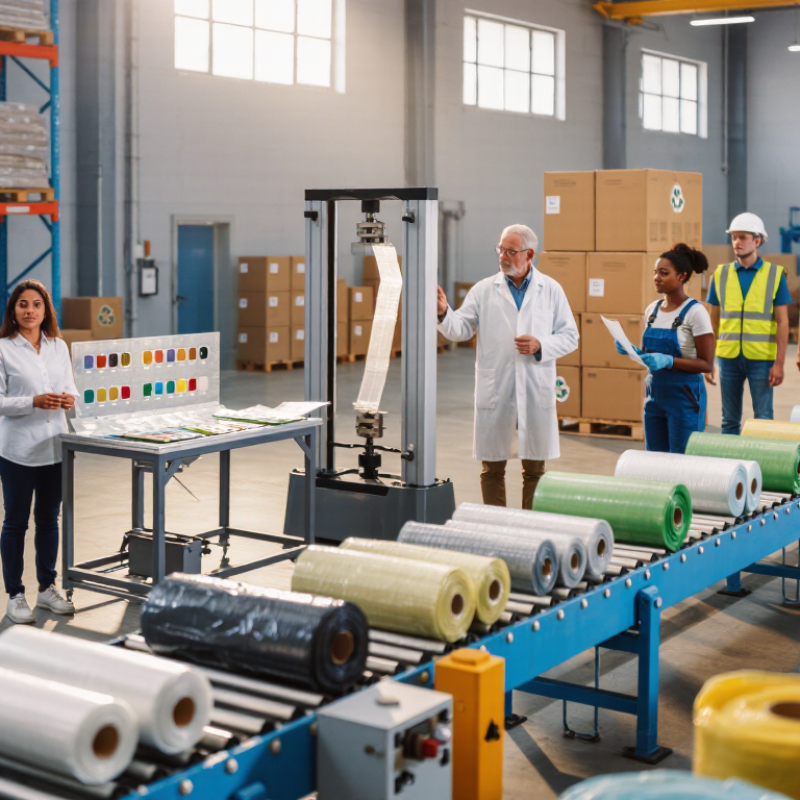
Global sourcing in 2026 starts with defining the garbage bag by market, not by a single universal specification. A household bag for a compact European kitchen may need a 20–30 liter capacity, neat dimensions, and clear waste-sorting information. Larger North American homes often prefer 45–60 gallon bags with stronger drawstrings and higher tear resistance. Do not copy one size everywhere.
Climate and usage change the specification. In humid regions, test leakage, seal strength, and storage stability after exposure to heat. For food-service applications, request thicker film and puncture testing because sharp bones can damage weak bags. Construction sites may need heavy-duty bags, reinforced edges, and simple color identification. Color preferences also differ. Some buyers prioritize discreet black film, while others require visible sorting colors.
Supplier evaluation should include production records, material declarations, sample inspections, and independent laboratory testing. Ask for measured thickness, tensile strength, elongation, and load performance rather than accepting “premium quality.” Verify current local requirements for waste labels, recycled content, packaging, and chemical restrictions before placing an order. A thicker bag is not always better; poor sealing can still cause leaks. My earlier sourcing plans focused too heavily on film weight. Field testing showed that shape, loading habits, and carton storage mattered just as much. Build specifications from real user behavior, then revise them when evidence proves the first version incomplete.
How to Choose Garbage Bags for Global Sourcing in 2026?
Material selection affects durability, cost, and environmental performance. Recycled polyethylene suits many general waste applications. Virgin polyethylene usually offers more consistent strength and stretch. Compostable materials may fit specific waste systems, but they often need controlled conditions. Confirm local disposal requirements before ordering large volumes. “Eco-friendly” is not always a complete specification.
Thickness should match the waste, not just the bag’s appearance. A 20-micron liner may handle office paper, while 35 to 60 microns can better resist food scraps, sharp packaging, or damp contents.
Capacity also needs practical testing. A 60-liter bag may fit a 60-liter bin, yet its usable volume depends on the rim and fill level. Leave enough headspace for tying. Overfilling creates avoidable tears.
Closure design changes handling speed.
Drawstring bags close quickly and transport neatly. Tie-handle designs are useful for retail and household use. Flat-top bags can reduce cost, but workers need extra time for tying.
I once compared bags by capacity alone and missed the effect of closure waste. That was a weak test. Ask suppliers for filled-bag trials, seam-strength data, roll dimensions, and sample performance after storage. Humidity and heat can change flexibility. A reliable sourcing decision needs repeatable tests, clear tolerances, and honest review of failed samples.
How to Choose Garbage Bags for Global Sourcing in 2026?
A reliable manufacturer should explain material sources, film structure, and production controls clearly. Ask whether bags use recycled resin, virgin resin, or a controlled blend. Each choice affects strength, odor, and environmental claims. Request recent test reports for thickness, tensile strength, tear resistance, seam strength, and leakage. A clean sample proves little. It may come from a better production batch.
Certifications require careful review. ISO 9001 can indicate documented quality procedures, but it does not guarantee strong garbage bags. Environmental certifications should match the product and destination market. For compostable bags, verify applicable standards and laboratory evidence. Ask for certificate numbers, issuing bodies, expiry dates, and tested product specifications. Vague sustainability language deserves skepticism. Certification paperwork can look impressive while covering a different material or thickness.
Production capacity should be checked, not simply accepted. Review machine counts, monthly output, shift schedules, resin storage, and quality-control staffing. Compare claimed capacity with previous shipment records and lead times. During a factory audit, inspect roll storage, moisture control, printing alignment, and carton labeling. Approve a sealed reference sample before mass production. Then use pre-shipment inspection and batch records to confirm consistency. Even careful sourcing has weak points. Forecasts change, resin quality fluctuates, and rushed orders increase defects. A supplier who reports these risks openly may be more dependable than one promising perfection.
Anonymized supplier benchmark for initial sourcing evaluation. Capacity, MOQ, and lead-time figures are indicative ranges and must be verified through current factory records, audit reports, and product samples.
| Supplier Profile | Primary Material | Typical Product Range | Thickness Range | Annual Output Capacity | Relevant Certifications or Standards | Quality-Control Capability | Typical MOQ | Typical Lead Time | Initial Evaluation |
|---|---|---|---|---|---|---|---|---|---|
| Large integrated polyethylene producer | LLDPE, LDPE, HDPE; virgin or controlled recycled-content blends | Municipal liners, commercial can liners, drawstring bags, heavy-duty construction sacks | 8–100 microns | 10,000–40,000 metric tonnes/year | ISO 9001:2015; ISO 14001:2015; ISO 45001:2018; recycled-content certification where applicable | Film-gauge testing, tensile and tear testing, seal-strength testing, drop testing, barcode and packing inspection | 1–5 metric tonnes per specification | 25–45 days after artwork and specification approval | Strong for global programs Best suited to recurring volume and multi-country supply. |
| Mid-sized flexible-film converter | LLDPE/LDPE blends with optional HDPE reinforcement | Retail rolls, kitchen bags, office-bin liners, star-sealed and flat-sealed bags | 7–60 microns | 2,000–10,000 metric tonnes/year | ISO 9001:2015 is common; ISO 14001:2015 should be verified; customer-specific recycled-content documentation | Incoming resin inspection, thickness mapping, tensile testing, seal inspection, roll-count verification | 300–800 kilograms per specification | 20–35 days after final approval | Good balance Suitable for private-label retail and regional distribution. |
| High-recycled-content specialist | Post-consumer recycled polyethylene, usually blended with LLDPE or LDPE | Black refuse sacks, recycled-content can liners, industrial and institutional bags | 15–100 microns | 1,500–8,000 metric tonnes/year | ISO 9001:2015; ISO 14001:2015; Global Recycled Standard or equivalent chain-of-custody evidence when claimed | Recycled-content verification, melt-flow monitoring, contamination checks, tensile testing, odor and color checks | 500–1,500 kilograms per specification | 30–50 days, depending on recycled-resin availability | Sustainability-focused Confirm recycled percentage, traceability, odor, and strength before contracting. |
| Compostable-bag specialist | Certified compostable polymers such as PBAT/PLA or starch-based compounds | Food-waste liners, organic-waste collection bags, caddy liners | 15–45 microns | 500–5,000 metric tonnes/year | EN 13432, ASTM D6400, ISO 17088, or equivalent certification for the specific product | Compostability documentation, disintegration and biodegradation evidence, seal-strength, leak, and storage-stability testing | 300–1,000 kilograms per specification | 35–60 days after certification and artwork review | Application-specific Do not use compostability claims without product-level certification and disposal guidance. |
| HDPE lightweight-film producer | HDPE, sometimes combined with LLDPE for improved toughness | Lightweight office liners, restroom bags, retail-bin liners, perforated rolls | 5–30 microns | 1,000–7,000 metric tonnes/year | ISO 9001:2015; environmental-management certification may be available by site | Gauge control, puncture and tear testing, dimensional checks, perforation quality, roll winding inspection | 200–600 kilograms per specification | 18–30 days after approval | Cost-efficient Appropriate for low-load applications where puncture resistance is not critical. |
| Heavy-duty industrial bag producer | LLDPE/LDPE with higher resin strength and optional multilayer construction | Construction debris sacks, hazardous-waste outer liners, bulky commercial waste bags | 50–150 microns | 1,000–6,000 metric tonnes/year | ISO 9001:2015; ISO 45001:2018 may support workplace-risk controls; application-specific regulatory compliance required | Puncture, tear, tensile, impact, seal-strength, leak, and load testing; batch traceability | 500–2,000 kilograms per specification | 30–50 days after technical approval | Best for demanding loads Specify actual load, waste type, puncture risk, and closure method. |
| Flexible small-batch custom converter | LDPE, LLDPE, HDPE, recycled blends, or customer-specified compounds | Custom colors, printed bags, unusual dimensions, trial orders, and seasonal packaging | 10–100 microns | 300–2,000 metric tonnes/year | ISO 9001:2015 may be available; verify every environmental, recycled-content, or compostability claim independently | Pre-production samples, basic gauge and seal checks, visual inspection, carton-count verification | 100–300 kilograms per specification | 15–30 days for standard items; 25–45 days for printed items | Good for testing Require third-party pre-shipment inspection for export orders. |
Choosing garbage bags for global sourcing in 2026 requires more than comparing thickness and price. Start with the destination market’s environmental rules. The OECD Global Plastics Outlook reported that only 9% of plastic waste was recycled globally in 2019. This figure makes material claims commercially important. Ask suppliers for resin details, recycled-content evidence, and laboratory test reports. Do not accept “eco-friendly” as proof. The UNEP report Turning off the Tap estimates that plastic pollution could fall by 80% by 2040 through reuse, recycling, and better product design. However, local rules may define these terms differently.
Packaging standards also affect import clearance. Check bag dimensions, load capacity, leakage resistance, carton strength, pallet stability, and product labeling. For European shipments, review the applicable requirements under the Packaging and Packaging Waste Regulation, including recyclability and producer-responsibility obligations.
Other markets may require local registration, packaging declarations, or language-specific markings. Confirm the correct HS classification and country-of-origin statement before production. Chemical compliance should also be checked, especially for additives, inks, fragrances, and recycled materials. Request recent testing against destination-market requirements, not only factory specifications. A certificate can be valid yet irrelevant. That mistake is common.
I usually compare a supplier’s technical file with a pre-shipment sample. The bag should survive a filled-bin test, not just look thick under warehouse lighting. Smaller cartons may reduce freight emissions, but weak cartons create costly damage. No checklist is perfect. Rules change, and supplier documents can age quickly. Build a yearly review into the sourcing plan.
Choosing garbage bags for global sourcing in 2026 requires more than comparing unit prices. A low quote can hide thinner film, smaller rolls, or expensive cartons. Record bag dimensions, thickness, material type, roll count, carton size, and gross weight. Ask for production samples, not only photos. Test tear resistance, leak performance, and seal strength with realistic household loads. Small differences matter across 50,000 rolls.
Calculate landed cost per usable bag. Include product price, tooling, inspection, inland transport, ocean or air freight, insurance, duties, and destination delivery. Divide the total by bags that pass inspection. A simple spreadsheet improves reliability. My early estimates often ignored damaged cartons and pallet fees. That was a costly mistake. Use two freight scenarios, because a delayed vessel can erase a cheap quotation. Air freight may protect a launch date, but it can damage margins.
Shipping risk also depends on packaging and season. Moisture-resistant cartons, clear pallet labels, and a written loading plan reduce surprises. Request factory lead time, booking time, port transit, customs clearance, and final-mile delivery separately. Add a practical buffer of seven to fourteen days. Then challenge it with past performance data. Plan for friction. Keep a backup production window. A supplier should provide inspection records, material specifications, and corrective-action evidence. Confirm documents before production begins, and recalculate costs whenever the order changes.
Total sourcing cost, shipping risk, and delivery timeline benchmark for 10,000 standard garbage bags.
The chart compares product cost, inland transport, international freight, import charges, and a risk reserve for representative sourcing routes. The risk reserve reflects possible delays, freight volatility, port congestion, and inspection costs. Domestic sourcing offers the shortest delivery time, while overseas routes may reduce unit cost but require approximately 27–42 days of transportation and buffer planning.
Planning benchmark in USD per 10,000 bags; estimates exclude storage and currency-hedging costs. Actual tariffs, freight rates, and transit times depend on product specifications, trade lanes, seasonality, and customs classification.