



What Are the Different Types of Metal Welding?
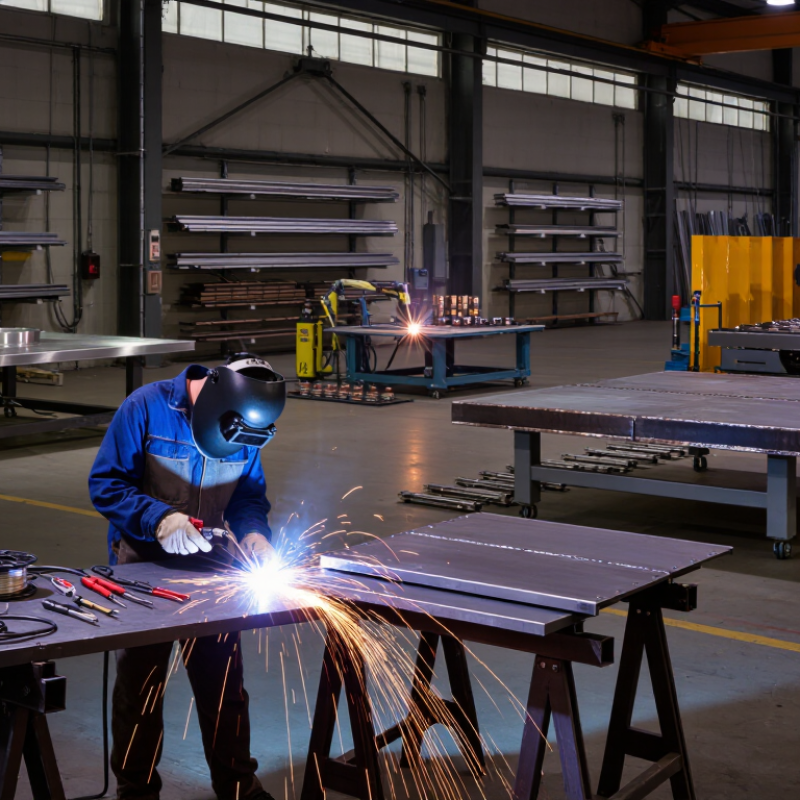
Metal welding joins metal parts by applying heat, pressure, or both. The right process can create a clean seam on thin sheet or a strong joint on thick plate. But no method is best for every job. Material, joint design, working position, and available equipment all matter.
This guide introduces common types of metal welding, including MIG (GMAW), TIG (GTAW), stick (SMAW), flux-cored, submerged arc, and resistance welding. Each uses a different heat source, electrode, or shielding method. MIG is often valued for speed and steady production. TIG offers precise control and a neat finish, but usually demands more practice. Stick welding is useful in many outdoor settings, while flux-cored processes can suit heavier work. The details matter.
A process that works well on a bench may feel awkward overhead. Thin steel can warp; a rough, dirty surface can affect weld quality. That is where tidy comparisons meet real shop conditions. This overview explains how the methods differ, where they are commonly used, and what trade-offs to consider when choosing among them. It also points to the importance of proper training, protective equipment, and following equipment instructions and qualified welding procedures. The choice is rarely just about appearance or speed. Good results depend on matching the process to the metal, joint, and task—and checking the finished weld carefully.
How Metal Welding Processes Are Classified
Metal welding is classified by how heat is produced, whether the base metal melts, and how the joint is formed. Fusion processes melt the edges, often adding filler metal. Arc welding uses an electric arc; gas welding uses a flame. Resistance welding heats the joint through electrical resistance and pressure, while laser and electron-beam methods concentrate energy into a narrow area. Small detail, big difference: a workshop may choose an arc process for a repair, but a factory may favor resistance welding for repeatable sheet-metal joints.
A second useful division separates fusion from solid-state welding. In friction welding, pressure and motion join parts without melting them; this can limit distortion in suitable components. ISO 4063 assigns reference numbers to welding and allied processes, helping engineers identify methods consistently in drawings and production records. These labels do not determine the best method by themselves. Joint shape, metal thickness, access, and inspection needs matter. The American Welding Society’s 2023 workforce report estimated that the United States would need 360,000 welding professionals by 2027, underscoring the value of clear process training. Still, classifications simplify real work; actual shop conditions can make a tidy chart less tidy.
What Are the Different Types of Metal Welding? - How Metal Welding Processes Are Classified
| Process Family | Common Processes | Heat or Energy Source | How the Joint Is Formed | Typical Uses and Characteristics |
|---|---|---|---|---|
| Arc welding | Shielded Metal Arc Welding (SMAW); Gas Metal Arc Welding (GMAW); Gas Tungsten Arc Welding (GTAW); Flux-Cored Arc Welding (FCAW); Submerged Arc Welding (SAW) | Electric arc between an electrode and the workpieces | The arc melts the base metal; filler metal is used in many processes. Shielding gas, flux, or both protect the molten weld from contamination. | Widely used for steel, stainless steel, and aluminum fabrication, construction, maintenance, and manufacturing. Equipment and portability vary by process. |
| Oxyfuel gas welding | Oxyacetylene welding and other oxyfuel welding methods | Flame produced by burning a fuel gas with oxygen | The flame melts the edges of the workpieces, with filler metal added when needed. | Used for repair work, thin materials, and some nonindustrial applications. It is also commonly used for heating and cutting, which are distinct from welding. |
| Resistance welding | Spot welding; Seam welding; Projection welding; Resistance butt welding | Electrical resistance heating combined with pressure | Current flows through the contacting parts, generating heat at the joint. Pressure forms the weld; filler metal is generally not used. | Common in high-volume production, especially for sheet-metal assemblies. Spot welding is widely used to join overlapping sheets. |
| Laser beam welding | Laser Beam Welding (LBW) | Focused laser beam | A concentrated beam melts material at the joint, producing a narrow weld. Filler metal may be added in some setups. | Suitable for precise, fast welding and automated production. The focused heat source can limit the size of the heat-affected zone. |
| Electron beam welding | Electron Beam Welding (EBW) | Focused, high-energy electron beam | The beam converts kinetic energy into heat as it strikes the workpiece, melting the joint area. The process is commonly performed in a vacuum. | Used for deep, narrow welds and precision components. Specialized equipment and vacuum requirements can limit its use. |
| Solid-state welding | Friction welding; Friction Stir Welding (FSW); Ultrasonic welding; Diffusion welding | Mechanical friction, vibration, pressure, or heat and pressure below the melting point | The materials bond without melting the main joint area. Depending on the process, pressure and plastic deformation create the bond. | Can reduce melting-related defects and distortion. Used for selected metals and applications such as plate, tube, and dissimilar-material joints. |
| Thermite welding | Thermite welding | Heat from an exothermic chemical reaction | Molten metal produced by the reaction fills a prepared joint, where it solidifies to form the weld. | Used in specialized field applications, including joining rail sections and large metal components where conventional power equipment may be impractical. |
Related Posts
-
China Top 10 Industrial Sheet Metal Manufacturers for Buyers?
-

What is Sheet Metal Nesting Software and How Does It Work?
-
What is Welding Software and How Can It Enhance Your Projects?
-
Exploring Advanced Metal Welding Techniques: Boosting Efficiency and Quality in Industrial Applications
-
Top Benefits of Using a Laser Cutting Machine for Your Projects
-
Top 10 Tips for Sheet Metal Bending Techniques You Need to Know