China has become a major sourcing destination for sheet metal work, supporting industries from electronics and medical equipment to construction machinery. However, choosing a dependable manufacturer requires more than comparing factory photos or low quotations. This guide examines ten leading Chinese companies through practical criteria, including fabrication experience, engineering support, equipment capacity, material control, quality systems, and delivery performance.
The review considers laser cutting, CNC bending, welding, stamping, surface finishing, and assembly capabilities. It also looks at how manufacturers handle drawings, prototypes, tolerances, and production changes. Real-world details matter. A reliable supplier should explain its inspection process, identify critical dimensions, and provide clear evidence of process control. Certifications can support credibility, but they do not replace consistent workmanship or responsive communication.
Some rankings may remain subjective. That deserves attention. A factory serving automotive volumes may not suit a startup needing ten precision enclosures. Likewise, a large production line does not automatically guarantee careful engineering support. Buyers should compare each manufacturer against their own materials, order volumes, tolerance requirements, and target market.
This article is designed as a practical starting point, not an absolute verdict. It highlights manufacturers that appear strong in different areas, while recognizing that capabilities can change over time. Before placing an order, readers should verify current machinery, certifications, sample quality, production capacity, and export experience directly with each supplier. Careful verification reduces surprises and creates a more reliable sourcing decision.
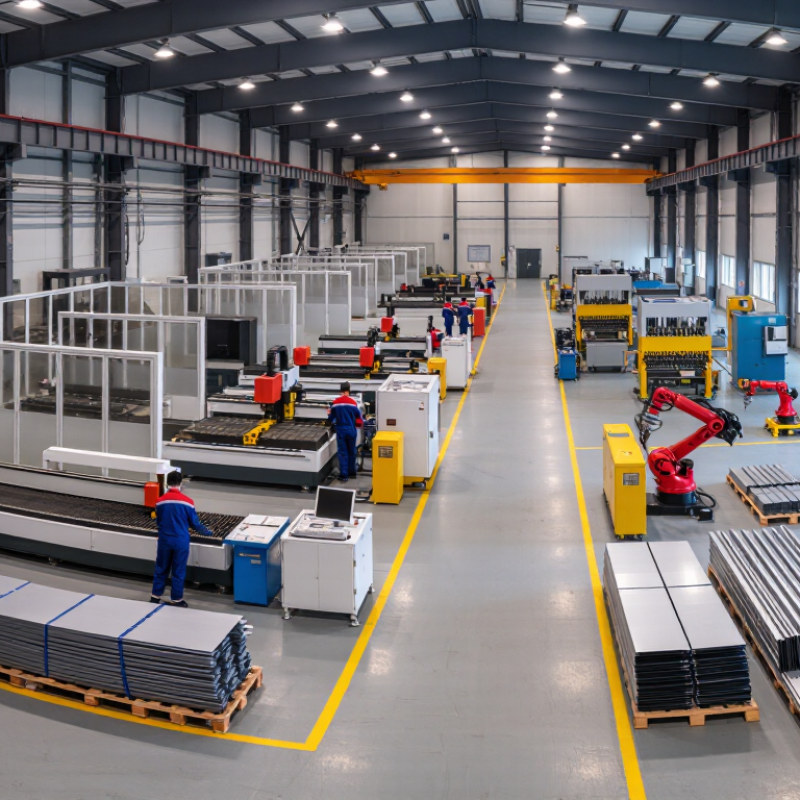
Sheet metal work turns flat metal sheets into useful parts through cutting, bending, punching, stamping, welding, and finishing. Common materials include stainless steel, aluminum, galvanized steel, and mild steel. A production line may begin with a laser cutting a precise outline, followed by a press brake forming clean angles. Welders then join panels, while inspectors check dimensions, surface quality, and hole positions.
China became a major manufacturing hub because it built a dense industrial network around these processes. Steel mills, tooling workshops, surface treatment facilities, packaging suppliers, and logistics providers often operate within reachable distances. This shortens production cycles and reduces transport between stages. Skilled technicians also support both simple brackets and complex enclosures. Large ports and mature export systems make international delivery more practical.
Cost remains important, but it is not the only advantage. Many Chinese factories can produce prototypes, adjust tooling, and scale orders without changing the entire workflow. Digital drawings can move quickly from engineering teams to cutting machines. Still, the model is not flawless. Quality may vary between workshops, especially when drawings lack tolerances or inspection standards. Clear material certificates, sample approval, and process checks are essential. A cheaper quotation can hide extra finishing work, uneven welding, or delayed corrections. Careful supplier evaluation matters more than location alone.
Choosing among China’s top sheet metal work manufacturers requires more than comparing prices or factory photographs. Examine their experience with your material, thickness, tolerances, and production volume. Ask for recent samples, inspection records, and clear process sheets. A capable manufacturer should explain laser cutting, bending, welding, finishing, and quality control in practical terms. Verify certifications directly, including their scope and expiry date. A certificate alone proves little.
Tips: Send the same drawing and specification to every candidate. Compare quotation details, not only the final figure. Check response speed, engineering questions, packaging plans, and replacement procedures. Visit the facility when possible. Look for organized material storage, calibrated measuring tools, and traceable batches. Small details matter.
Request a trial order before signing a large agreement. Measure hole positions, bend angles, surface quality, and assembly fit. Reliable suppliers welcome documented feedback and correct root causes instead of offering vague promises. Ask how they manage drawing revisions and rejected parts. I once trusted an attractive sample too quickly; later, production revealed inconsistent corner radii. That mistake changed my evaluation method. Capacity claims also need testing, because full production schedules can expose weak planning. The strongest choice is not always the cheapest or largest factory. It is the manufacturer that communicates clearly, controls variation, and provides evidence for each important claim.
China’s top 10 sheet metal work manufacturers represent different strengths, equipment levels, and production cultures. This profile-based view focuses on practical capabilities rather than advertising claims. One manufacturer specializes in laser cutting and welded frames for automation equipment. Another focuses on stainless steel enclosures, using controlled bending and smooth edge finishing. A third serves electrical projects with powder-coated cabinets and documented inspection records.
A high-volume producer supports appliance components through progressive stamping and repeatable tooling. A smaller workshop offers prototypes, low-volume parts, and faster engineering feedback. One established factory combines CNC punching, laser cutting, and robotic welding for industrial panels. Another is known for aluminum housings, where surface marks require careful handling. A specialist in precision brackets works with tight tolerances and digital inspection reports. One manufacturer supplies server racks and emphasizes airflow openings, grounding, and assembly access. The final profile covers custom fabrication, including frames, covers, and made-to-order structures.
Experienced buyers should examine material certificates, first-article samples, weld penetration, and coating thickness. Factory audits can reveal more than polished photographs. Production schedules also need close review. Some suppliers communicate well before payment, then respond slowly during revisions. That weakness deserves attention. Even capable manufacturers may struggle with unclear drawings or frequent design changes. A reliable partnership depends on measurable tolerances, realistic lead times, packaging tests, and corrective-action records. Sample approval remains essential, especially for visible panels and parts used outdoors.
| Profile | Primary Manufacturing Region | Typical Business Focus | Core Sheet Metal Processes | Common Materials | Quality & Compliance Focus | Typical End Markets | Production Model | Export Service Features |
|---|---|---|---|---|---|---|---|---|
| Profile 01 | Guangdong Province | Precision custom fabrication and enclosure production | Laser cutting CNC bending Welding Powder coating | Carbon steel, stainless steel, aluminum, galvanized steel | Dimensional inspection, traceable production records, ISO 9001-oriented quality control | Industrial automation, electrical equipment, telecommunications, commercial machinery | Prototype, low-volume, and repeat batch production | Engineering drawing review, export packaging, consolidated shipment support |
| Profile 02 | Jiangsu Province | Industrial cabinets, machine frames, and structural assemblies | CNC punching Laser cutting MIG/TIG welding Assembly | Mild steel, stainless steel, aluminum alloys, coated sheet | Weld inspection, surface-finish checks, process documentation, supplier material verification | Factory automation, energy equipment, transportation systems, infrastructure | Made-to-order fabrication with project-based assembly | FOB and EXW coordination, protective packaging, multilingual technical communication |
| Profile 03 | Zhejiang Province | Electrical boxes, control panels, and outdoor metal housings | Turret punching Bending Stud welding Screen printing | Cold-rolled steel, stainless steel, aluminum, zinc-coated steel | Ingress-protection design support, tolerance control, coating-thickness inspection | Power distribution, renewable energy, charging infrastructure, control systems | Standardized product families plus custom engineering | Export labeling, palletized delivery, documentation for overseas installation |
| Profile 04 | Shanghai Municipality | High-precision components for equipment manufacturers | Fine laser cutting Precision bending CNC machining Deburring | Aluminum, stainless steel, copper, precision cold-rolled steel | Coordinate measurement, first-article inspection, controlled revision management | Medical equipment, laboratory instruments, semiconductor support equipment | Prototype-to-production programs with engineering collaboration | Technical drawing confidentiality, export crating, batch traceability |
| Profile 05 | Fujian Province | Commercial equipment panels and stainless-steel fabricated parts | Shearing Bending TIG welding Brushing | 304 and 316 stainless steel, aluminum, galvanized steel | Visual surface inspection, weld appearance control, food-contact material documentation when required | Food-service equipment, retail fixtures, hospitality, commercial interiors | Small and medium batch manufacturing | Flat-pack or assembled shipment, corner protection, moisture-resistant packaging |
| Profile 06 | Shandong Province | Heavy-duty frames, brackets, and structural sheet metal parts | Plasma cutting Laser cutting Robotic welding Shot blasting | Carbon steel, abrasion-resistant steel, galvanized steel, stainless steel | Weld procedure control, coating preparation, load-related dimensional checks | Construction machinery, agricultural equipment, logistics systems, heavy industry | Medium-volume production and contract fabrication | Container loading plans, corrosion protection, inspection reports on request |
| Profile 07 | Hubei Province | Automotive and transportation-related sheet metal assemblies | Progressive forming Stamping Spot welding Fixture assembly | High-strength steel, galvanized steel, aluminum alloys | Production part approval processes, gauge inspection, process capability monitoring | Automotive components, rail equipment, mobility systems, commercial vehicles | Tooling-supported repeat production | Sequenced packaging, lot identification, scheduled export deliveries |
| Profile 08 | Anhui Province | HVAC components, ventilation parts, and equipment housings | Coil cutting Roll forming Bending Seam welding | Galvanized steel, aluminum, stainless steel, pre-painted sheet | Leakage prevention, dimensional checks, corrosion-resistance and finish inspection | HVAC, cleanrooms, building services, industrial ventilation | Standard component production with customized dimensions | Nested packing, moisture control, project delivery scheduling |
| Profile 09 | Chongqing Municipality | Electrical and mechanical assemblies for industrial applications | Laser cutting CNC bending Welding Powder coating | Cold-rolled steel, stainless steel, aluminum, copper components | Incoming material inspection, assembly verification, electrical-safety documentation support | Industrial controls, power equipment, transportation, machinery | Custom fabrication with kitting and partial assembly | Commercial invoices, packing lists, export cartons, shipment consolidation |
| Profile 10 | Hebei Province | General fabrication, brackets, frames, and metal support systems | Cutting Punching Bending Welding | Carbon steel, galvanized steel, stainless steel, aluminum | Basic dimensional inspection, weld-quality checks, coating and packaging verification | Construction, electrical installation, storage systems, industrial maintenance | Small to medium batch contract manufacturing | Competitive container loading, custom labeling, documentation assistance |
China Top 10 Sheet Metal Work Manufacturers?
A reliable top-ten comparison should examine production evidence, not marketing language. Strong manufacturers usually combine laser cutting, CNC punching, press-brake forming, welding, machining, and surface finishing. Their workshops should show calibrated equipment and clear inspection procedures. Common materials include carbon steel, stainless steel, aluminum, and copper. Material certificates should identify grade, thickness, and batch details. Small details matter.
Certifications offer useful evidence, but they need verification. ISO 9001 suggests controlled quality processes. ISO 14001 may indicate structured environmental management. Automotive projects may require IATF 16949. However, a certificate alone cannot prove stable production. Buyers should check its scope, expiry date, and issuing body. Ask for sample inspection reports, tolerance records, and corrective-action examples.
Lead times often range from seven to fifteen working days for simple fabricated parts. Complex assemblies may need four to eight weeks. Tooling, finishing, and overseas shipping can extend schedules. A capable supplier should separate prototype timing from mass-production timing. Request a realistic schedule with approval points. Do not trust unusually short promises. They may reflect optimism rather than capacity. I have found that supplier comparisons can still miss hidden delays, especially during drawing revisions or material shortages. That weakness deserves attention.
China remains a major sourcing base for sheet metal work. World Bank data shows that China contributed about 31% of global manufacturing value added in 2023. However, scale does not guarantee stable quality. Request material certificates, process records, and recent inspection reports before discussing price. A serious supplier should explain its laser cutting tolerance, bending limits, welding controls, and surface treatment process in clear terms.
Ask for a sample made from your actual drawing. Check hole position, bend angle, burrs, weld distortion, and coating thickness. Measure critical dimensions with calibrated tools, not by sight. The World Steel Association reported that China produced about 1.005 billion tonnes of crude steel in 2024. This supports broad material availability, but it also makes traceability essential. Confirm the steel grade, heat number, thickness tolerance, and replacement procedure for nonconforming material.
Audit the factory through video or an on-site visit. Look for organized material storage, visible work instructions, maintained machines, and a clean inspection area. ISO 9001 certification can indicate a documented quality system, but certification alone proves little about daily production. Review the certificate scope and ask for corrective-action examples. Communication matters too. Test how quickly the team answers drawing questions and reports risks. I have seen attractive quotations fail because revision control was weak. Leave room for that possibility. Choose a partner that documents changes, protects intellectual property, and agrees on measurable acceptance standards before production.