Selecting the right metal working supplier requires more than comparing prices on a spreadsheet. Global buyers need dependable production, verified quality, transparent communication, and practical delivery capacity. The World Steel Association reported approximately 1.89 billion tonnes of crude steel production worldwide in 2023. That scale reflects a vast and complex supply network, where capability can differ sharply between factories.
This guide examines ten metal working suppliers serving international buyers. It considers machining accuracy, sheet metal fabrication, welding, casting, finishing, inspection systems, certifications, and export experience. Supplier evaluation also includes equipment visibility, sample quality, production lead times, packaging methods, and after-sales support. These details matter when a component must fit precisely inside an enclosure or arrive without surface damage.
Industry data supports a more careful approach. The World Bank’s Logistics Performance Index 2023 highlights major differences in customs efficiency, infrastructure, and shipment reliability across markets. Deloitte’s 2024 Global Chief Procurement Officer Survey also emphasizes resilience, supplier visibility, and risk management. These findings suggest that a low unit price may hide expensive delays or rework. Sometimes, it does.
The suppliers featured here are assessed through publicly available company information, manufacturing capabilities, certifications, market reputation, and buyer-focused criteria. No ranking can remove every uncertainty. Public data is uneven, and factory performance may change after an audit. Buyers should still request current drawings, inspection records, material certificates, production samples, and realistic quotations before making a decision. A strong supplier is not merely a workshop with modern machines. It is a reliable production partner that communicates clearly when problems appear.
Top 10 Metal Working Suppliers for Global Buyers
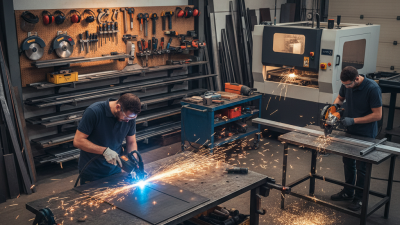
Metalworking suppliers convert raw materials into usable parts, assemblies, or finished products. Their services may include laser cutting, bending, CNC machining, welding, stamping, and surface finishing. A reliable supplier should explain its equipment, material range, production limits, and inspection process clearly. Buyers need more than attractive photographs. They need measurable evidence, such as tolerance reports, material certificates, sample parts, and clear production records.
Global buyers usually require accurate drawings, agreed specifications, stable communication, and predictable delivery. Packaging also matters when steel or aluminum parts travel long distances. Confirm shipment terms, documentation, payment arrangements, and responsibility for quality checks before production begins. Ask whether the supplier can support small trial orders and later volume increases. A supplier may be technically capable but still unsuitable for your schedule or communication style.
Tips: Share drawings in a controlled format. Mark critical dimensions clearly. Request a first-article inspection before mass production. Check how rejected parts are recorded and corrected. Do not judge quality from one perfect sample; production consistency matters more. In practical sourcing, misunderstandings often begin with vague words such as “smooth finish” or “tight tolerance.” Define them with numbers, photos, and accepted inspection methods. Some buyers overlook packaging details, then discover scratches after arrival. That mistake is avoidable, but not always.
For global buyers, evaluating a metalworking supplier requires more than comparing unit prices. The 2024 World Steel Association Short Range Outlook projected global steel demand at about 1.75 billion tonnes. Such scale makes supply continuity, material verification, and production capacity critical purchasing factors.
Ask for heat numbers, mill certificates, inspection plans, and calibration records. Review how each lot moves from raw material storage to final shipment. ISO’s 2023 Survey reported more than 1.26 million ISO 9001 certificates worldwide. Certification helps, but it does not replace an on-site audit. Check nonconformance rates, corrective-action speed, and sample inspection results. Numbers can mislead. A clean presentation may hide weak process control.
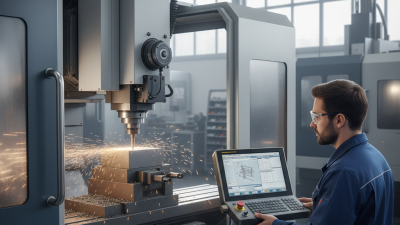
Production equipment also deserves close attention. Confirm machining tolerances, surface-finish capability, tooling maintenance, and backup capacity. Request recent first-article reports and realistic lead-time data. Suppliers should explain their subcontracting controls, packaging methods, and export documentation. The 2024 World Steel Association outlook also highlighted continuing pressure on steel markets, making material-price adjustments worth examining in contracts. Environmental reporting should include energy use, scrap handling, and emissions boundaries. These details reveal operational maturity. Still, no scorecard is perfect. A supplier may satisfy every checklist item yet communicate poorly during a quality problem. Trial orders, measurable service-level targets, and regular performance reviews provide stronger evidence than promises.
| Rank | Anonymous Supplier Profile | Primary Production Region | Core Processes | Typical Materials | Typical Part Size | Standard Machining Tolerance | Quality Evidence | Typical Prototype Lead Time | Typical Production Lead Time | Export Documentation | Evaluation Score |
|---|---|---|---|---|---|---|---|---|---|---|---|
| 1 | Profile A — Integrated CNC and Fabrication Partner | East Asia | CNC millingCNC turningsheet-metal fabricationassembly | Aluminum, carbon steel, stainless steel, brass, engineering plastics | Up to approximately 1,000 × 600 × 600 mm | Typically ±0.ert5 mm; tighter tolerances subject to drawing and process review | ISO 9001-certified quality system; first-article inspection; CMM inspection available | 7–12 working days | 20–35 working days | Commercial invoice, packing list, certificate of origin, material certificates on request | 9.2 / 10 |
| 2 | Profile B — High-Precision CNC Specialist | Central Europe | 5-axis millingturn-millinggrinding | Tool steel, stainless steel, titanium, aluminum, nickel alloys | Up to approximately 800 × 500 × 500 mm | Typically ±0.01 mm on controlled features; capability depends on geometry and material | ISO 9001; calibrated inspection equipment; full dimensional reports for qualified orders | 10–18 working days | 25–45 working days | Traceability records, inspection reports, material certificates, customs documents | 9.0 / 10 |
| 3 | Profile C — Sheet-Metal and Enclosure Manufacturer | North America | laser cuttingCNC bendingweldingpowder coating | Cold-rolled steel, galvanized steel, stainless steel, aluminum | Panels and enclosures up to approximately 2,400 × 1,200 mm | Typically ±0.2 mm for formed features; final tolerance depends on material thickness | ISO 9001; weld procedure controls; coating thickness checks; final visual inspection | 8–15 working days | 20–40 working days | Commercial invoice, packing list, export classification data, coating documentation | 8.8 / 10 |
| 4 | Profile D — Contract Manufacturing and Assembly Supplier | Southeast Asia | CNC machiningstampingdie castingassembly | Aluminum alloys, zinc alloys, stainless steel, mild steel | Components up to approximately 700 × 500 × 400 mm | Typically ±0.05 mm for machined features; production tolerances confirmed by drawing | ISO 9001; incoming, in-process, and final inspection; supplier traceability controls | 10–16 working days | 25–50 working days | Invoice, packing list, certificate of origin, inspection report, material declaration | 8.7 / 10 |
| 5 | Profile E — Industrial Fabrication and Heavy Components Supplier | South Asia | fabricationlarge-part machiningstructural welding | Carbon steel, stainless steel, cast iron, alloy steel | Welded or machined structures up to approximately 3,000 × 2,000 × 1,500 mm | Typically ±0.5 mm for fabricated structures; machined features controlled separately | ISO 9001; welding procedure qualification; NDT available for specified welds | 15–25 working days | 35–70 working days | Mill certificates, weld records, inspection reports, packing and shipping documents | 8.4 / 10 |
| 6 | Profile F — Rapid Prototyping and Low-Volume Production Supplier | Western Europe | CNC machininglaser cuttingrapid toolingfinishing | Aluminum, stainless steel, brass, mild steel, ABS, nylon | Prototype parts up to approximately 600 × 400 × 400 mm | Typically ±0.1 mm for standard CNC features; part-specific inspection available | Documented inspection plan; material and surface-finish records available by order | 3–8 working days | 15–30 working days | Invoice, packing list, material certificate, surface-treatment confirmation | 8.3 / 10 |
| 7 | Profile G — Precision Turning and Bar-Stock Specialist | Eastern Europe | CNC turningSwiss turningthreadinggrinding | Stainless steel, free-cutting steel, brass, aluminum, titanium | Typical bar diameter 3–65 mm; larger diameters subject to machine capacity | Typically ±0.01–0.03 mm for controlled turned features | ISO 9001; gauge calibration; sampling inspection and capability studies for repeat orders | 8–14 working days | 20–40 working days | Material certificates, dimensional reports, RoHS/REACH declarations where applicable | 8.2 / 10 |
| 8 | Profile H — Forging and Heat-Treatment Supplier | East Asia | closed-die forgingheat treatmentCNC finishing | Carbon steel, alloy steel, stainless steel, aluminum alloys | Forged parts generally up to approximately 25 kg per piece | Typically ±0.2–0.5 mm before finish machining; final features controlled by CNC process | ISO 9001; heat-treatment charts; hardness testing; chemical composition verification | 20–35 working days | 45–80 working days | Heat-treatment records, mill certificates, inspection reports, export documents | 8.0 / 10 |
| 9 | Profile I — Metal Stamping and Progressive-Die Supplier | North Asia | progressive stampingdeep drawingspot weldingplating coordination | Carbon steel, stainless steel, copper, brass, aluminum | Strip widths commonly up to approximately 300 mm; part size depends on press capacity | Typically ±0.05–0.20 mm for formed features, depending on material and tool design | ISO 9001; tool tryout reports; dimensional inspection; control plans for mass production | 15–25 working days for prototypes | 35–70 working days | Material certificates, inspection reports, plating records, commercial shipping documents | 7.9 / 10 |
| 10 | Profile J — Surface Finishing and Secondary-Operations Partner | Southern Europe | deburringanodizingplatingpowder coatingsubcontract machining | Aluminum, steel, stainless steel, zinc alloys, copper alloys | Parts up to approximately 1,500 × 800 × 600 mm, depending on finishing line | Dimensional control follows the supplied drawing; coating thickness commonly verified by gauge | ISO 9001; coating thickness records; color and adhesion checks; batch traceability | 7–14 working days | 20–45 working days | Process certificates, coating reports, material declarations, packing list and invoice | 7.8 / 10 |
Top metalworking suppliers differ by capabilities, certifications, production scale, and target markets. Precision CNC machining specialists serve aerospace, medical, robotics, and industrial equipment buyers. Their strengths include tight tolerances, multi-axis machining, and documented inspection reports. Sheet metal fabricators support electronics, construction, and commercial equipment markets with laser cutting, bending, and powder coating.
Stamping suppliers handle high-volume automotive and appliance components. Forging companies produce strong parts for energy, transportation, and heavy machinery applications. Casting suppliers offer complex shapes for pumps, valves, agricultural equipment, and engineered systems. Tube and pipe specialists manufacture formed, welded, or seamless components for fluid handling and structural projects.
Extrusion suppliers are valuable for lightweight frames, heat sinks, and architectural systems. Welding and fabrication workshops build large assemblies, storage structures, and custom machinery. Surface treatment providers improve corrosion resistance, wear performance, and appearance. Prototyping suppliers help global buyers test designs before committing to larger production runs.
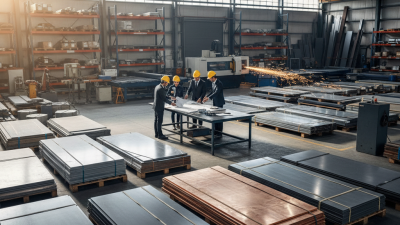
Capability alone is not enough. Buyers should review material traceability, process control, inspection methods, and realistic delivery records. Factory audits can reveal details that brochures often miss. A supplier may claim global capacity but lack local service or stable logistics. That matters. Markets also change, and a strong supplier in one region may not fit another. Rankings should therefore remain practical, not absolute. Supplier performance needs regular review.
Top 10 Metal Working Suppliers for Global Buyers?
Comparing ten metal working suppliers requires more than checking unit prices. Quality should be verified through samples, dimensional reports, surface checks, and material certificates. Ask whether inspectors measure critical tolerances before shipment. A clean factory and organized records often reveal practical experience. Still, appearances can mislead. Require traceable documentation.
Pricing needs a wider view. Compare tooling fees, packaging, inspection charges, customs terms, and payment conditions. A cheaper quote may hide expensive rework or unsuitable minimum order quantities. Certifications such as ISO 9001 can support reliable processes, but certificates alone cannot guarantee every batch. Request recent audit evidence and production references. Delivery performance also matters. Review quoted lead times, production capacity, holiday schedules, and shipping options. A supplier promising twelve days may need twenty during peak demand.
Tips: Use the same drawing, material grade, tolerance table, and annual volume for every quotation. Request one pilot order before approving full production. Add a realistic buffer for inspection and transportation. Track actual delivery dates, not only promised dates. A simple supplier scorecard can compare quality, landed cost, certification strength, communication, and on-time delivery. I would not choose the highest score automatically. One late shipment may be manageable, while repeated communication gaps can damage an entire project. Ask difficult questions early. Reliable partnerships are built through evidence, not confident promises.
Selecting the right metalworking supplier requires more than comparing hourly rates. Global buyers should verify process capability, material control, and delivery discipline before requesting final prices.
The ISO Survey of Certifications 2022 recorded more than 1.2 million ISO 9001 certificates worldwide. Certification helps, but it does not prove consistent machining quality. Ask for recent inspection reports, calibration records, and sample parts from similar materials. Review tolerance results, surface finish, and corrective-action history. Small evidence matters.
The World Bank’s 2023 Logistics Performance Index evaluates customs, infrastructure, tracking, and timeliness. These factors directly affect international metalworking projects. Buyers should test a supplier’s response time with a detailed drawing and a realistic delivery date. Request packaging photographs and shipping documents from previous export orders. UNCTAD reports that over 80% of global trade by volume moves by sea, so port access and export experience deserve serious attention.
Price is only one variable. Compare tooling charges, minimum order quantities, payment terms, inspection costs, and the consequences of late delivery. A factory tour or live video audit can reveal crowded work areas, aging equipment, or weak storage practices. I have found that polished presentations can hide ordinary production problems. Do not ignore uncomfortable questions. An imperfect supplier may still be suitable if its risks are visible, measured, and controlled through clear quality agreements.