Top 10 Sheet Metal Bending Companies in China

China’s manufacturing scale makes supplier selection consequential. The China Association of Automobile Manufacturers reported 31.28 million vehicles produced in 2024, up 3.7% year over year. That figure does not measure sheet metal bending demand directly. It does, however, show the scale of industries that rely on formed metal parts, from vehicle brackets to appliance enclosures.

Good bending work is visible in small details: a clean flange, consistent angles, and holes that still align after forming. Metal-forming researcher Dr. Taylan Altan’s work points to a practical principle: repeatable parts depend on controlling material flow, tooling, and process conditions. This is a paraphrase, not a verbatim quotation. It also leaves an important question: how well does a supplier maintain that control across different materials and production volumes?

This overview of the Top 10 Sheet Metal Bending Companies in China considers capabilities, equipment, quality systems, and experience serving industrial customers. Company rankings can never capture every project’s needs. A factory suited to high-volume automotive components may not fit a custom, low-volume order. Buyers should verify material grades, tolerances, sample parts, and inspection procedures directly. Small checks matter. A polished machine list alone is not proof of consistent output.
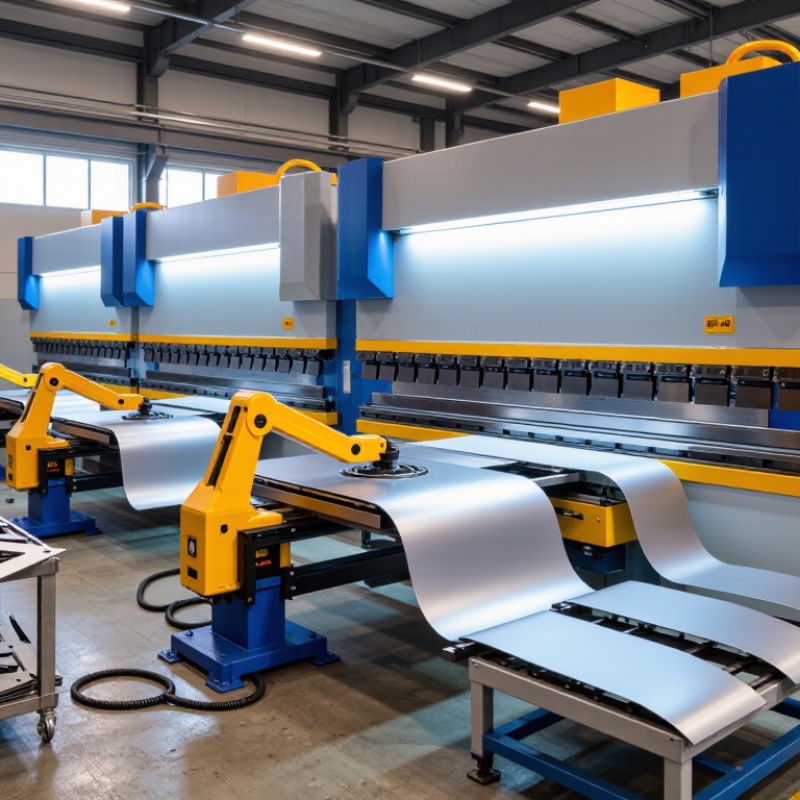
Top 10 Sheet Metal Bending Companies in China

What Sheet Metal Bending Involves and How It Is Used

Sheet metal bending reshapes a flat sheet by applying force along a straight line, without cutting through the material. In a workshop, a press brake pushes a punch into a matching die, forming an angle or channel. The bend radius, material thickness, and metal type all affect the result. Thin aluminum may behave differently from stainless steel of the same thickness.

Springback matters. After the force is removed, metal can partly return toward its original shape, so operators may need to bend slightly beyond the target angle. That adjustment depends on the material and tooling; a drawing alone cannot predict every shop-floor variation. Small test bends help confirm settings before a full batch is made.

A technician checks the finished part with an angle gauge and calipers. A few degrees can affect how an enclosure door closes or how a bracket meets its mounting surface. Bending is widely used for electrical cabinets, vehicle panels, appliance housings, and ventilation ducts. It can reduce the need for welded joints, but it is not automatically the best choice for every shape. Tight bends may crack, and long parts can bow. Real parts are sometimes less tidy than the CAD model suggests. Planning for tolerances early helps avoid costly rework.

How to Evaluate Sheet Metal Bending Companies in China

A capable sheet metal bending supplier should be judged by repeatable results, not equipment photos. Ask which materials and thicknesses its press brakes handle, and whether operators check tooling wear. For a sample part, compare bend angles, flange lengths, and hole positions against your drawing. Small deviations can make an assembly difficult.

Ask for a first-article inspection report and material traceability records. Check how the supplier controls springback, since different alloys and thicknesses can shift the final angle. A useful trial includes parts from more than one production run, not only a carefully tuned sample. One sample proves little. Ask how measurement tools are calibrated, too.

Review communication as closely as machinery. Can engineers flag an awkward bend radius or suggest a practical design adjustment before production? Request clear answers about capacity, change control, packaging, and realistic lead times. Visit the workshop if possible; observe how parts are identified and how rejected pieces are handled. A polished website proves little. I would still leave room for doubt: even a strong audit cannot guarantee every future batch, so agree on inspection criteria before ordering.

Profiles of Ten Leading Sheet Metal Bending Companies in China

These ten profiles present different strengths found among China’s sheet metal bending manufacturers, without treating any single capability as proof of overall quality. One shop specializes in short-run prototypes, where quick setup matters. Another handles larger production batches with repeatable press-brake routines. A third focuses on stainless steel enclosures, while a fourth works mainly with aluminum panels. The fifth profile emphasizes complex bends and tight tolerances. The sixth centers on cabinets and frames. The seventh serves customers needing cutting and bending under one roof. The eighth highlights custom tooling for unusual shapes. Details matter.

The final two profiles represent manufacturers with broader fabrication services and those built around export-oriented project support. Across all ten, practical evaluation starts with evidence: sample parts, inspection records, material traceability, and clear tolerance discussions. Ask how operators check springback, protect visible surfaces, and manage revisions. A clean workshop helps, but it does not guarantee consistent parts. Nor does a polished brochure.

These profiles are a starting point, not a ranking of proven performance. Capabilities can vary between machines, shifts, and production volumes. I would want to compare a real drawing with a sample bend before making firm claims. That step can feel slow. It often prevents costly surprises.

Comparing Their Capabilities, Equipment, and Services

Top 10 Sheet Metal Bending Companies in China: Comparing Their Capabilities, Equipment, and Services

A useful comparison starts with the parts a factory can actually produce. Check press-brake tonnage, working length, CNC axis configuration, and tooling range against your drawings. Ask for sample bends in your material and thickness, then inspect flange consistency and springback. A machine list alone proves little. The International Federation of Robotics reported that China reached 470 industrial robots per 10,000 manufacturing employees in 2023. This signals strong automation across manufacturing, but it does not certify any individual bending supplier. Request evidence from the shop floor.

Tips: Send a representative drawing, material grade, thickness, and annual volume when requesting a quote. Ask how the supplier handles first-article checks, revision control, and packaging. Compare quoted tolerances with inspection records, not just sales claims. Small details matter.

Services also separate capable partners from simple job shops. Compare engineering support, laser-cutting integration, deburring, welding, finishing, and delivery planning. A supplier with in-house cutting may reduce handling, but only if its processes and schedules are coordinated. Request a sample inspection report and clarify who approves changes. Lead times can look attractive on paper; production reality is less tidy. A short trial order can reveal communication gaps, packaging damage, or inconsistent bend angles before larger volumes are committed.

Sheet Metal Bending: Typical Minimum Inside Bend Radius

Indicative design guidelines expressed as a multiple of material thickness (R/t). Smaller values generally allow tighter bends.

These are common rules of thumb, not guaranteed limits. Actual bend radii depend on material temper, thickness, grain direction, and tooling; verify requirements with material specifications and process testing.

Industries Served and Factors to Consider When Choosing a Supplier

Sheet metal bending serves automotive, appliance, construction, and electrical-equipment manufacturers. Automotive suppliers may need repeatable brackets with precise hole locations. Appliance makers often prioritize clean edges and consistent panels. Construction projects can require heavier gauges, while electrical enclosures need accurate bends for doors and mounting features. Medical equipment makers may also use formed sheet metal, where surface finish and dimensional control matter.

A supplier should be able to review drawings and flag practical issues, such as a bend placed too close to a hole. Ask how it handles material grades, thickness changes, bend radii, and tolerance checks. Details matter. Request sample parts or inspection records that show actual measurements, not just a general claim of precision. Also clarify whether deburring, finishing, and packaging are included. These steps can affect both cost and fit.

One uncomfortable point: the cheapest quote may omit important work. Compare quotes line by line, including tooling, prototypes, scrap assumptions, and delivery terms. A small trial order can reveal whether parts arrive flat, protected, and consistent across a batch. Communication deserves attention too. If drawing questions receive vague answers, production changes may become harder to manage. Even a capable shop may not be the right fit for every material or order size.

Top 10 Sheet Metal Bending Companies in China – Industries Served and Factors to Consider When Choosing a Supplier

The entries below are anonymized supplier capability profiles, not named companies or a verified ranking. Processes, materials, and tolerances depend on the supplier, part design, and order requirements; confirm specifications directly during quotation.

No. Supplier Profile Typical Industries Served Common Work and Processes Materials Often Processed Key Factors to Check
1 General-purpose sheet metal fabricator Industrial equipment, construction, commercial products Press-brake bending, cutting, drilling, welding, and assembly Carbon steel, stainless steel, aluminum Ask for comparable part examples, inspection methods, material traceability, and a clearly itemized quotation.
2 Electrical enclosure specialist Power distribution, control systems, telecommunications Cabinet and panel bending, cut-outs, welding, hardware installation Painted or coated steel, stainless steel, aluminum Check dimensional consistency, door and panel fit, grounding features, ingress-protection requirements, and finish quality.
3 Automotive and transport component supplier Automotive, commercial vehicles, rail, transport equipment Repeat-part bending, formed brackets, structural subassemblies, welding Steel grades and aluminum alloys specified by the drawing Review production controls, change management, lot traceability, inspection records, and ability to meet forecast volumes.
4 HVAC and ventilation fabricator Heating, ventilation, air conditioning, building services Duct sections, equipment panels, brackets, formed channels Galvanized steel, stainless steel, aluminum Confirm duct and flange dimensions, joint compatibility, corrosion protection, packing method, and delivery frequency.
5 Electronics and precision enclosure fabricator Electronics, instrumentation, laboratory and networking equipment Small panels, chassis, brackets, enclosure parts, precision bending Thin-gauge aluminum, stainless steel, coated steel Check drawing review, bend-angle measurement, cosmetic protection, hole-to-bend control, and prototype support.
6 Heavy-gauge forming and fabrication supplier Construction machinery, material handling, industrial plant Large formed plates, heavy brackets, structural parts, welding Carbon steel and other drawing-specified plate materials Verify press-brake capacity, tooling and part-size limits, lifting arrangements, weld inspection, and transport planning.
7 Stainless steel fabrication specialist Food processing, commercial kitchens, medical and industrial equipment Formed panels, trays, covers, welded assemblies, surface finishing Stainless steel grades specified for the application Ask how the supplier prevents surface contamination and handles weld finishing, grain direction, passivation, and protective film.
8 Aluminum component fabricator Transport, electronics, architectural products, equipment housings Aluminum panels, covers, brackets, formed assemblies Aluminum alloys and tempers defined by the engineering specification Confirm alloy and temper sourcing, bend-radius guidance, surface protection, and finishing compatibility.
9 Prototype and low-volume job shop Product development, research equipment, custom machinery One-off parts, design iterations, short-run bending and fabrication Common sheet metals selected to suit design and availability Evaluate engineering communication, prototype lead time, revision control, first-article inspection, and repeat-order pricing.
10 Integrated, export-oriented contract manufacturer Industrial equipment, building products, consumer and commercial products Bending combined with cutting, finishing, assembly, and export packing Materials specified by customer drawings and purchase requirements Check communication, capacity planning, quality documentation, packaging standards, shipping terms, and total landed cost.