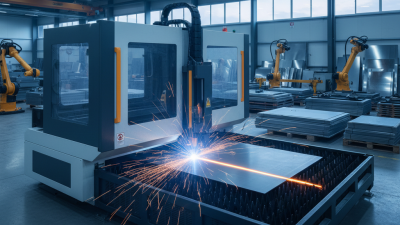
A laser cutting machine uses a focused beam of light to separate, shape, or engrave materials with remarkable precision. Theodore H. Maiman, the engineer who built the first working laser, is often credited with saying, “The laser is a solution looking for a problem.” That observation still feels relevant. A laser becomes valuable when its energy meets a clear manufacturing need.
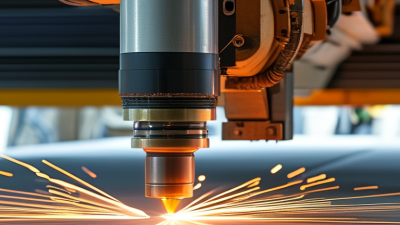
Inside the machine, a laser source generates concentrated light. Mirrors or optical fibers guide the beam toward a cutting head. A lens compresses it into a tiny focal point, sometimes narrower than a human hair. At that point, heat melts, burns, or vaporizes the material. Assist gas then pushes away molten residue and helps protect the cut edge. The result depends on power, speed, focus, gas pressure, and material thickness.
Small details matter. A steel sheet may show clean edges, while acrylic can produce polished-looking sides. Wood may darken around the cut. Operators must also manage fumes, reflections, ventilation, and eye protection. Experience often matters more than advertised wattage. More power does not automatically mean better cutting.
This article explains what a laser cutting machine is and how it works in practical terms. It also examines common laser types, machine components, suitable materials, and operating limits. Some explanations simplify complex physics. That is a weakness worth admitting. Real production results can change with humidity, surface coatings, maintenance, and operator judgment. Reliable work requires testing, measurement, and respect for documented safety procedures.
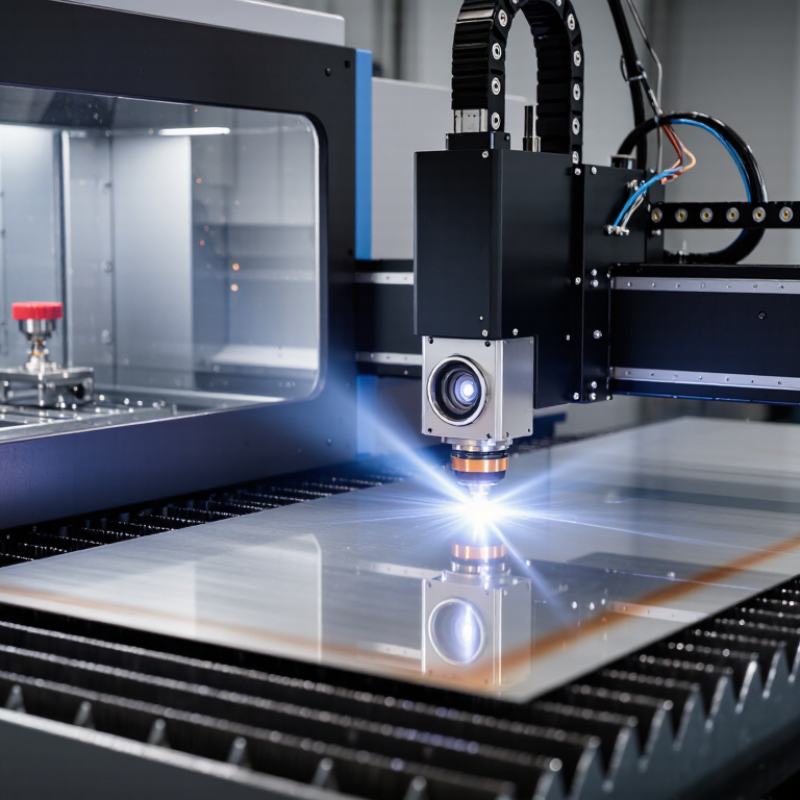
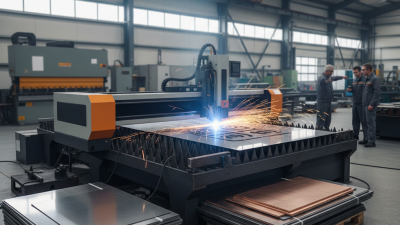
A laser cutting machine is a computer-controlled tool that cuts or engraves materials with a concentrated beam of light. The beam melts, burns, or vaporizes a narrow path along a programmed design. A lens focuses the beam onto the work surface, while moving mirrors or a cutting head guide it accurately. The machine usually uses compressed air, nitrogen, or oxygen to clear melted material from the cut.
It can process sheet metal, acrylic, wood, cardboard, fabric, and some coated surfaces. Material choice matters. A setting that cuts thin steel may scorch wood within seconds. Operators adjust power, speed, focus, and assist-gas pressure through control software.
The resulting cut has a small kerf, which means less material is wasted than with many mechanical tools. Edges may still show discoloration, burrs, or slight melting.
In workshop practice, a test grid is useful before production. It reveals how different settings affect the surface. Ventilation and protective enclosures are essential because fumes and reflected light can create serious hazards. Some materials are unsuitable and should not be placed in the machine. Precision is impressive, but it is not automatic. Dust on the lens, incorrect focus, or warped sheet metal can spoil an otherwise accurate job. I still find that careful inspection after cutting prevents small defects from becoming expensive mistakes.
A laser cutting machine uses concentrated light to melt, burn, or vaporize material along programmed paths. Not just light. Its performance depends on several connected components, not the laser alone. The laser source creates the beam, while a power supply controls its output. In workshop practice, unstable power can produce uneven edges. That small detail matters.
Mirrors or fiber delivery elements guide the beam toward the cutting head. The focusing lens compresses it into a tiny spot. A nozzle directs assist gas around the beam, pushing molten material away. The cutting head also maintains a set distance from the sheet. Sensors help it follow warped surfaces. Alignment is easy to underestimate.
The CNC controller converts digital drawings into coordinated movements. Motors drive the gantry or table along precise X, Y, and sometimes Z axes. A rigid frame reduces vibration during rapid direction changes. The worktable supports material and lets debris fall away. Cooling units protect the source and optics from heat. An exhaust system removes smoke and fine particles. Door interlocks, emergency stops, and temperature monitoring protect operators. In my view, maintenance is the overlooked component. Dirty lenses, weak cooling, or poor grounding can ruin accuracy. Some machines still cut acceptably while defects slowly develop, so inspection should not rely on appearance alone.
A laser cutting machine turns electrical energy into a concentrated beam of light. The beam travels through mirrors or fiber optics, then passes through a focusing lens. At the sheet surface, its energy melts, burns, or vaporizes a narrow path. An assist gas removes molten material from the kerf. Oxygen can accelerate cutting in mild steel, while nitrogen helps protect stainless steel edges from oxidation.
The cutting head follows programmed coordinates from a CNC controller. It first pierces the sheet, then maintains a controlled height above the surface. Speed, power, focus position, and gas pressure must work together. A small error can leave dross underneath the edge. The International Federation of Robotics reported 541,302 industrial robot installations worldwide in 2023, showing the growing demand for repeatable automated production. Yet automation does not remove judgment. Operators still inspect pierce marks, corner quality, and heat-affected zones. The IEA’s Energy Efficiency 2023 report states that industry uses about 37% of global final energy, so idle time and poor parameter settings matter. The process is precise, but not perfect. Even a clean-looking cut may hide excessive heat or wasted gas. ISO 11553-1:2020 also emphasizes safeguarding requirements for laser-processing machinery, including protection from hazardous radiation and unexpected access.
A laser cutting machine focuses a high-energy beam onto a material surface. The beam melts, burns, or vaporizes the material, while an assist gas removes molten debris and helps produce a clean cut. Industrial systems commonly use different laser sources depending on the material and cutting requirements.
Typical industrial laser wavelengths: Fiber and Nd:YAG lasers operate near 1 micrometer and are efficiently absorbed by many metals. CO₂ lasers operate at 10.6 micrometers and have historically been widely used for nonmetallic materials and some metal-cutting applications.
A laser cutting machine focuses a powerful beam onto a material. Heat removes, melts, or vaporizes a narrow path. The result can be clean, detailed cuts with little physical contact. Material choice determines the cutting speed, edge quality, and required power.
Wood is a practical choice for laser cutting. Plywood, MDF, and solid wood can produce signs, panels, and small structures. Natural wood may burn unevenly because its grain and moisture vary. Paper, cardboard, and many fabrics also cut easily. Acrylic creates smooth, polished edges, especially at suitable power settings. Leather can work well, but coatings may darken or release unpleasant fumes.
Some plastics are unsuitable. PVC and vinyl can release corrosive chlorine compounds when heated. Polycarbonate often melts badly instead of cutting cleanly. I would not trust a material chart alone. Always check its composition and test a small sample. It matters.
Metals require specialized laser systems and careful settings. Stainless steel, mild steel, aluminum, and brass are commonly processed with appropriate equipment. Thin sheets cut more easily than thick plates. Glass, stone, and ceramic are usually better for engraving or marking than full-depth cutting. Reflective metals can redirect energy and damage equipment if handled incorrectly. A clean edge is never guaranteed. Surface coatings, moisture, density, and airflow can change the result. Good ventilation and verified safety procedures remain essential during every material test.
A laser cutting machine focuses a high-energy beam onto a material surface. The beam melts, burns, or vaporizes a narrow path. An assist gas then removes molten material from the cut zone. Cutting quality depends on more than laser power. Speed, focal position, nozzle alignment, gas pressure, material thickness, and surface condition interact continuously.
ISO 9013:2017 evaluates thermal-cut quality through perpendicularity tolerance, mean roughness, and burr formation. These measurements reveal problems that a quick visual inspection may miss. Excessive speed can leave vertical striations and incomplete separation. Excessive power may widen the kerf and create a larger heat-affected zone. Nitrogen often supports cleaner edges on stainless steel, while oxygen can increase cutting speed through an exothermic reaction. Air is not neutral.
The U.S. Department of Energy’s 2022 Industrial Decarbonization Roadmap reports that process heating represents about 51% of manufacturing energy use. This makes efficiency a performance issue, not merely an operating-cost concern.
Lower gas flow does not automatically mean better efficiency. It may increase dross and require rework. In practical production, a stable focus position often matters more than a small power increase.
Operators should record edge roughness, burr height, kerf width, and actual energy use for each material batch. A perfect edge is not always the fastest edge. I would not trust a single test cut. Thermal distortion, dirty optics, and inconsistent sheet flatness can quietly change the result.