Why buy a laser machine for your business? The opportunity is real. Across manufacturing, signage, packaging, automotive, and customized products, laser technology is becoming a practical investment rather than a futuristic concept. Grand View Research reported that the global laser processing market was valued at approximately USD 19.5 billion in 2023. It also forecasts continued growth through 2030, driven by automation, precision manufacturing, and demand for flexible production.
A laser machine can cut, engrave, mark, or weld with consistent accuracy. On a busy workshop floor, that may mean cleaner edges, fewer tool changes, and less material waste. It can also shorten the path from a customer’s digital drawing to a finished product. The International Trade Administration identifies advanced manufacturing as a key area for industrial innovation and productivity improvement. However, market growth does not guarantee business success. A machine must match your materials, order volume, operator skills, ventilation, and maintenance budget.
The decision requires evidence, not excitement. Compare power ratings, working areas, software compatibility, service response times, and total ownership costs. Safety matters equally. ISO 11553 and IEC 60825-1 provide important guidance for laser equipment safety and risk control. A laser machine is not a magic box. Poor setup can create uneven cuts, wasted sheets, or expensive downtime. Reported market forecasts also vary by definition and region, so treat them as direction, not certainty. The strongest purchase decision combines supplier documentation, hands-on testing, trained operators, and realistic sales projections. Mistakes may still happen. Careful planning makes them smaller, safer, and easier to correct.
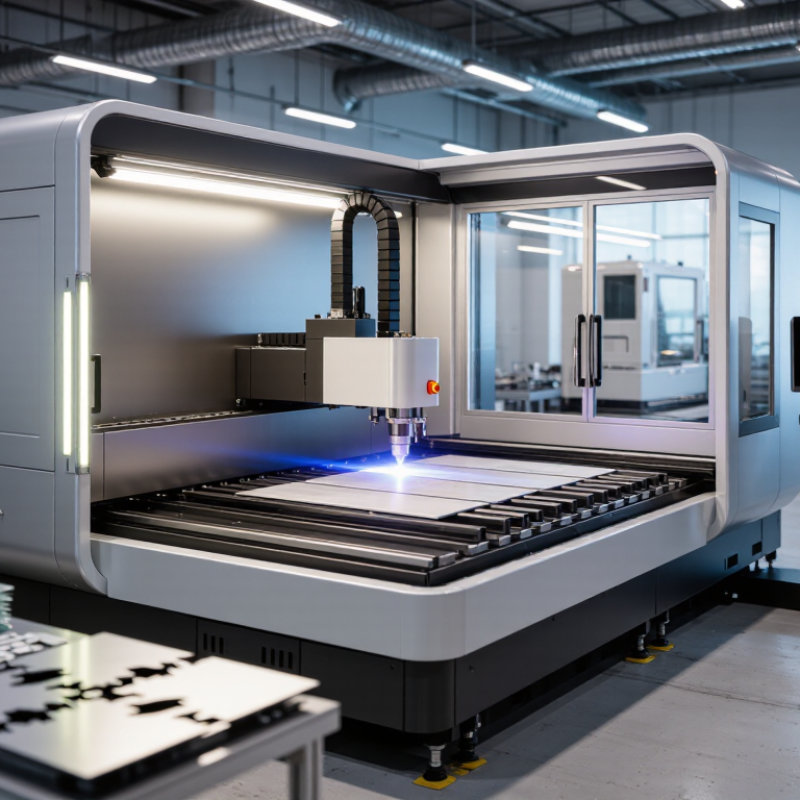
Buying a laser machine becomes more practical when its technical basics match your work. Cutting machines often use CO2 or fiber sources, while diode systems suit lighter engraving tasks. Wavelength matters because materials absorb light differently. CO2 systems commonly operate near 10.6 micrometers, while fiber systems operate near 1.06 micrometers. That difference affects metal cutting, plastics, wood, and marking quality.
Power controls speed, thickness, and operating cost. A higher wattage is not automatically better. A 1,000-watt fiber source may cut sheet metal efficiently, but it can be excessive for small engraved parts. According to Fortune Business Insights, the global laser processing market was valued at approximately 6.2 billion dollars in 2023. This growth reflects demand across automotive, electronics, medical devices, and general fabrication. Still, market growth does not guarantee a suitable machine for every workshop.
Application trials should come before purchase. Test the exact material, thickness, finish, and production volume. Watch the cut edge under bright light; roughness often reveals incorrect speed or focus. Enclosures, extraction, interlocks, and trained operators are essential under IEC 60825-1 safety principles. Grand View Research projects continued expansion in industrial laser applications, yet its forecasts depend on investment cycles and regional manufacturing demand. That uncertainty deserves attention. A careful buyer compares wavelength, rated power, spot size, motion accuracy, maintenance needs, and verified safety documentation. Sometimes, the cheaper machine costs more through wasted material and slow setup.
A laser machine can earn its place in a business when its beam is controlled, not merely powerful.
Beam quality determines how tightly energy focuses on the work surface. A smaller, cleaner spot can produce narrower cuts, finer markings, and less heat spread.
In practice, operators inspect edge smoothness, kerf width, and the heat-affected zone. These details reveal more than a headline wattage number.
Speed depends on material, thickness, focus, motion accuracy, and assist gas.
Thin sheet may move quickly, while thicker stock needs slower passes and careful piercing.
Higher speed is not always better. Too much speed can leave incomplete cuts; too little can create excess heat and rough edges.
Test it first.
A useful trial records settings, cut time, surface finish, and rejected parts.
That record supports repeatable production and more honest cost estimates.
Material limits remain important.
Metals reflect energy differently, and some plastics can melt, discolor, or release hazardous fumes.
Wood, coated surfaces, composites, and unknown materials need small-scale testing and suitable ventilation.
A supplier’s material chart is a starting point, not proof of performance in your workshop.
I would also question whether the machine handles your real batch sizes, tolerances, and maintenance skills.
The overlooked expense is often setup time. The best purchase is not the fastest machine, but the one that delivers stable results on your actual materials.
Energy efficiency is becoming a practical purchasing factor, not a technical footnote. Industry studies report that fiber lasers can exceed 30% wall-plug efficiency under suitable operating conditions. The Laser Institute of America’s Handbook of Laser Materials Processing compares this favorably with many CO2 systems, often measured near 8–15%. That difference affects electricity use during long production shifts.
The U.S. Department of Energy identifies industrial motor systems as major electricity consumers. A more efficient laser source can reduce the energy drawn per cutting hour.
Fraunhofer ILT publications also emphasize that source efficiency depends on power level, cooling, optics, and maintenance. The figure is not magic. Actual results vary.
In a workshop, the difference becomes visible beside the machine. A fiber system may require less cooling capacity and create lower operating heat. Operators can monitor power meters against material output, rather than trusting brochure figures. This experience-based check matters.
A 30% efficiency claim may describe the laser source, not the complete machine. Include motion systems, extraction, chiller loads, and standby power in the calculation. The estimate may look less impressive, but it becomes more reliable.
For businesses comparing equipment, wall-plug efficiency offers a measurable starting point for calculating energy cost, production capacity, and long-term equipment value.
A laser machine deserves a business case built from production data, not excitement. Track daily orders, cutting time, setup delays, overtime, and rejected parts. For example, a shop producing 120 parts daily may reduce cycle time from six minutes to four. That could raise practical throughput to nearly 180 parts. The increase depends on loading, programming, and inspection capacity.
Labor savings need careful measurement. One operator may supervise cutting, but another person could still handle finishing or quality checks. Compare total labor hours per batch before and after installation. Scrap also matters. If poorly aligned tools create 8% waste, more consistent cutting might reduce it to 3%. Record material costs beside rejection reasons. Scrap reduction can quietly become a major monthly gain.
Payback should include the full investment. Add installation, training, ventilation, maintenance, energy, and software costs. Then divide the net investment by verified monthly savings and added contribution. A $42,000 system producing $6,800 in monthly benefit suggests a 6.2-month payback. My first estimate was too optimistic because it ignored idle shifts and rush-job interruptions. A 30-day production trial, supplier quotations, and conservative utilization assumptions create a more reliable forecast. The estimate may still be wrong. That is useful information.
Why Buy a Laser Machine for Your Business?
Safety and Compliance: Class 4 Controls Under ANSI Z136.1 Guidance
A laser machine can improve cutting speed, repeatability, and material efficiency. However, a Class 4 system requires more than a warning label. OSHA’s Technical Manual states that Class 4 lasers can cause immediate eye or skin injury. Direct, reflected, and sometimes diffuse exposure may be hazardous. Combustible materials can also ignite. ANSI Z136.1-2022 recommends a documented laser safety program, controlled access, training, protective eyewear, and engineered safeguards.
ANSI guidance also uses maximum permissible exposure limits. These limits depend on wavelength, exposure duration, and pulse characteristics. Therefore, eyewear selection cannot rely only on visible darkness. The optical density must match the laser’s wavelength and power. A competent laser safety officer should verify the calculation. A supplier’s brochure is useful, but it is not a complete risk assessment.
Tips: Install interlocked enclosures, emergency stops, beam stops, and visible warning indicators. Keep a written alignment procedure near the machine. Inspect interlocks before each shift. Record training and maintenance checks. Do not bypass a control during production pressure. That shortcut feels practical, but it can create an invisible exposure path. OSHA’s laser safety guidance and ANSI Z136.1 should be reviewed together, because a compliant-looking installation may still have weak daily controls.
| Safety Dimension | Class 4 Risk or Requirement | Recommended Business Control | Verification Evidence | Implementation Priority |
|---|---|---|---|---|
| Laser Classification | Class 4 lasers exceed the accessible emission limits for Class 3B and may present hazards from direct, specular, and, in some cases, diffuse reflections. | Confirm the laser classification, wavelength range, operating mode, maximum output, pulse duration, and beam characteristics before installation. | Current equipment documentation, classification label, technical specifications, and a documented acceptance review. | Before purchase and installation |
| Eye and Skin Hazard | Unprotected exposure can cause serious eye injury and may cause skin injury, depending on wavelength, power, exposure duration, and beam geometry. | Prevent access to the beam path, use suitable engineering controls, and provide task-specific personal protective equipment where residual exposure is possible. | Risk assessment, beam-path inspection, PPE assessment, and documented safe-work procedures. | Critical |
| Laser Controlled Area | Class 4 operation should be restricted to a controlled area where access and operating conditions can be managed. | Define the controlled area boundaries, restrict entry during operation, control access points, and establish procedures for visitors and service personnel. | Floor plan, access-control procedure, entry authorization list, and inspection records. | Before operation |
| Warning Signs and Indicators | Personnel must be alerted when a hazardous laser is present or operating. | Post appropriate laser warning signs at controlled-area entrances and use visible or audible emission indicators where practical. | Entrance signage inspection, indicator function test, and documented corrective actions. | Required control |
| Beam Enclosure | Open beam paths increase the likelihood of direct or reflected exposure. | Use a full or partial enclosure, beam tubes, guards, barriers, beam stops, and non-reflective internal surfaces wherever feasible. | Engineering review, enclosure drawings, interlock test results, and routine inspection checklist. | Preferred control |
| Protective Housing and Interlocks | Removing protective covers or opening access panels can expose personnel to hazardous radiation. | Use protective housing, access-panel interlocks, and fail-safe shutdown functions. Do not bypass interlocks during normal production. | Functional test records, maintenance logs, and documented authorization for controlled service activities. | Critical |
| Key Control and Authorized Operation | Unauthorized or untrained operation can create immediate exposure and process hazards. | Use key control or an equivalent authorization method, limit operation to trained personnel, and maintain an authorization register. | Training records, operator authorization list, and key-control procedure. | Required control |
| Protective Eyewear | Eyewear must be selected for the actual wavelength, optical density, pulse characteristics, and exposure conditions. | Specify eyewear using a documented hazard calculation. Mark or identify the protected wavelength range and required optical density; ensure side protection and fit are appropriate. | Eyewear specifications, supplier test information, inspection records, and user issue log. | Task-specific |
| Nominal Hazard Zone | The hazardous distance depends on output power or energy, beam diameter, divergence, wavelength, pulse parameters, and optical configuration. | Calculate or assess the nominal hazard zone for each operating mode and control access to the area where hazardous exposure could occur. | Calculation worksheet, measured beam parameters, operating-mode register, and approved area layout. | Required assessment |
| Beam Alignment and Service | Alignment and maintenance can create higher exposure potential because guards or enclosures may be removed. | Use written alignment procedures, the lowest practical power, temporary barriers, alignment tools, authorized personnel, and appropriate protective eyewear. | Service procedure, work permit, maintenance record, and post-service safety check. | High priority |
| Fire and Material Hazards | Class 4 beams may ignite combustible materials or damage unsuitable plastics, coatings, and machine components. | Remove unnecessary combustibles, use beam stops and materials suitable for the wavelength and power, and provide suitable fire-response equipment. | Housekeeping inspection, material compatibility review, fire-risk assessment, and incident-prevention checklist. | Required assessment |
| Fume and Process Control | Laser processing may generate smoke, vapors, particulates, or hazardous decomposition products independent of the optical hazard. | Provide local exhaust ventilation or process extraction, evaluate the material safety information, and control exposure to generated contaminants. | Ventilation performance records, material assessment, filter-maintenance log, and occupational hygiene review. | Process-dependent |
| Training and Competency | Personnel need to understand laser hazards, controls, warning systems, PPE, emergency actions, and prohibited practices. | Provide initial and refresher training before authorization, with additional instruction for alignment, maintenance, and emergency response. | Training syllabus, attendance records, competency assessment, and refresher schedule. | Before authorization |
| Laser Safety Officer | Class 4 operations generally require coordinated oversight of the laser safety program. | Assign a qualified Laser Safety Officer or equivalent responsible person with authority to review hazards, approve procedures, and stop unsafe operations. | Appointment record, defined responsibilities, inspection program, and corrective-action tracking. | Program control |
| Administrative Procedures | Engineering controls may not eliminate all risks during setup, alignment, troubleshooting, or maintenance. | Maintain written standard operating procedures, lockout or isolation steps where applicable, access rules, inspection schedules, and change-control records. | Controlled procedures, revision history, inspection forms, and completed work permits. | Required control |
| Emergency Response | Potential incidents include suspected eye exposure, skin exposure, fire, fume release, and interlock failure. | Define shutdown, evacuation, first-response, medical-evaluation, incident-reporting, and equipment-isolation procedures. Suspected eye exposure requires prompt professional medical evaluation. | Emergency plan, contact list, drills or briefing records, and incident investigation reports. | Before operation |
| Inspection and Periodic Review | Controls can degrade after repairs, configuration changes, relocation, or repeated use. | Inspect enclosures, interlocks, signs, beam stops, eyewear, ventilation, and procedures at defined intervals and after significant changes. | Inspection schedule, completed checklists, calibration or test records, and corrective-action closure. | Ongoing |
| Regulatory Alignment | ANSI Z136.1 provides voluntary consensus guidance; applicable workplace, electrical, fire, building, and environmental requirements may also apply. | Use ANSI Z136.1 as part of a broader compliance review and verify requirements with the relevant authority having jurisdiction before commissioning. | Compliance matrix, local code review, approval records, and documented management sign-off. | Before commissioning |