2026 Best Robotic Welding Systems for Global Buyers

Global manufacturers are rethinking how welding productivity is measured. Robotic welding now supports repeatable seams, steadier arc quality, and safer handling of heavy assemblies. Yet performance depends on more than robot speed. Fixture accuracy, torch access, programming time, wire management, and service response often decide the real return.

The International Federation of Robotics reported 541,302 industrial robots were installed worldwide in 2023. Asia represented about 70% of new installations, showing where automation demand is strongest. IFR’s World Robotics 2024 report also confirms continued investment in manufacturing automation. These figures do not prove that every factory needs a robot. They show a broader shift toward measurable, flexible production.

This 2026 guide compares robotic welding systems for global buyers. It considers payload, reach, welding processes, controller usability, vision options, cell design, energy use, and after-sales support. It also examines integration with positioners, safety equipment, digital production software, and existing fabrication lines. A system that looks affordable may become expensive after tooling, training, and import logistics. Small details matter.

The shortlist is not perfect. Applications differ widely.

A compact MIG cell may suit repeatable steel frames, while a larger system may handle pressure-vessel components or long structural joints. Buyers should validate duty cycles with sample welds, not brochures alone. Reports provide useful market direction, but shop-floor evidence remains decisive. Regional certifications, local technicians, spare-parts access, and operator training deserve equal attention. Reliable selection requires technical testing, transparent supplier claims, and honest review of production limits.
2026 Best Robotic Welding Systems for Global Buyers

What Defines a Robotic Welding System in 2026

2026 Best Robotic Welding Systems for Global Buyers

What Defines a Robotic Welding System in 2026

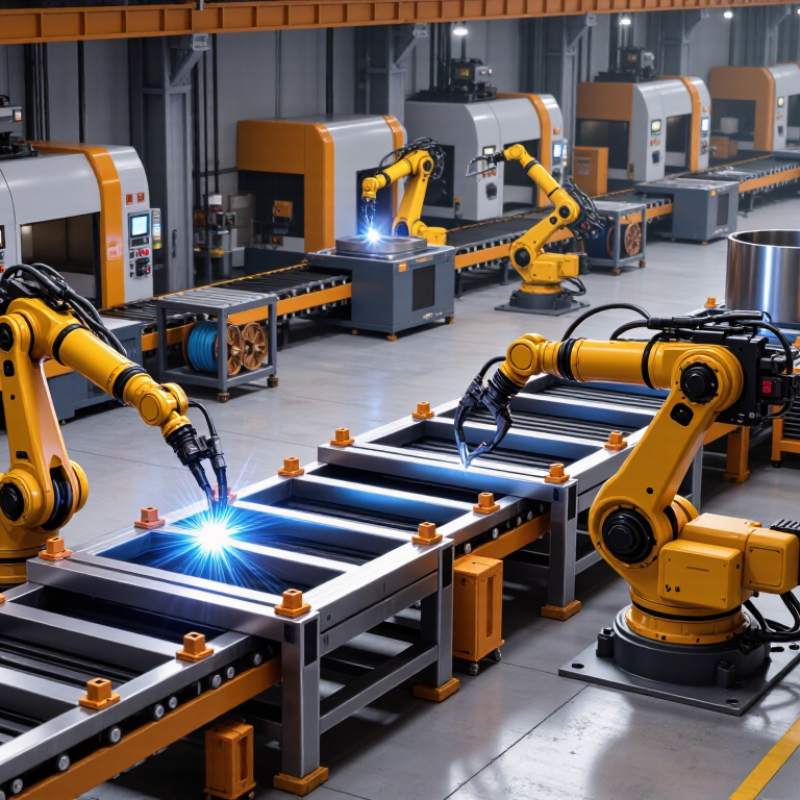
A robotic welding system is more than a programmable arm and welding torch. It combines a robot, power source, controller, fixture, positioner, sensors, and a guarded work cell. Modern systems also collect production data, monitor arc performance, and support remote diagnostics. The real value appears when these parts work as one process.

Seam tracking helps the torch follow small joint variations. Vision sensors can identify part position before welding begins. A stable fixture still matters. Poor clamping can create distortion, even with advanced software. In a working cell, operators check wire feed, gas flow, contact tips, and weld spatter during each shift. These details often decide whether automation remains productive.

For global buyers, a reliable system must fit local safety rules, electrical conditions, and workforce skills. Safety functions should align with applicable industrial robot standards and include controlled access, emergency stops, and clear maintenance procedures. Good systems also offer traceable weld records, straightforward fault messages, and accessible replacement parts. Cybersecurity deserves attention when equipment connects to factory networks.

Cycle-time promises need careful review. They may exclude changeovers, fixture loading, cleaning, and rework. A smaller system with easier programming can outperform a faster cell that only specialists understand. That is an uncomfortable point, but it matters. The best 2026 solution is adaptable, serviceable, and honest about its limits.

2026 Best Robotic Welding Systems for Global Buyers

What Defines a Robotic Welding System in 2026?

Payload capacity is a key selection factor because it determines the suitable welding torch, wire-feeding equipment, positioner, and workpiece-handling configuration. Typical industrial ranges increase from light-gauge arc welding to high-force spot-welding applications. In 2026, buyers also evaluate repeatability, sensing, safety integration, energy efficiency, and compatibility with automated production data systems.

Core Technologies Used in Modern Robotic Welding

Modern robotic welding systems depend on more than a programmable arm. Their core technologies include seam tracking, machine vision, adaptive welding control, and real-time sensing. Laser or through-arc sensors can detect joint shifts near the torch. This matters when plates vary by several millimeters.

The International Federation of Robotics reported 541,302 industrial robot installations worldwide in 2023. Its World Robotics 2024 report also recorded about 4.28 million robots operating globally. These figures show strong automation demand, but robot density alone does not guarantee welding quality.

A reliable system synchronizes robot motion, wire feeding, arc voltage, current, and shielding gas. Force control helps manage contact and fixture variation. Useful, but not perfect.

Digital twins can test reach, cycle time, and collision risks before commissioning. Vision systems can inspect bead width, porosity indicators, and missing welds. Artificial intelligence may improve parameter selection, yet poor training data can create confident mistakes. That deserves caution. Safety functions should follow recognized requirements, including ISO 10218 for industrial robots and ISO/TS 15066 for collaborative applications. Global buyers should request weld procedure records, repeatability tests, sensor calibration evidence, and sample parts made from their actual materials. A polished demonstration is not enough. In production, heat distortion, dirty surfaces, and inconsistent fit-up often expose weaknesses that software cannot hide.

How to Evaluate Robotic Welding Systems for Global Use

Choosing the best robotic welding system for global use requires more than comparing robot speed. Buyers should examine joint quality, repeatability, safety controls, and service access. A system must handle local power standards, workshop temperatures, dust, and voltage fluctuations. These details often decide whether production remains stable after installation.

Request sample welds using your actual materials, thicknesses, and joint designs. Inspect penetration, bead consistency, spatter, and rework rates. Ask for documented cycle times, training plans, spare-part availability, and remote support response times. Clear technical records improve purchasing confidence. However, supplier data may reflect ideal factory conditions. Independent testing is still necessary.

Tips: Test the system during a realistic shift, not only a short demonstration. Check whether operators can adjust programs safely and understand error messages. Measure torch access around corners and confirm fixture accuracy. Review total ownership costs, including integration, maintenance, energy use, and downtime. Do not ignore language and time-zone barriers. They can delay troubleshooting. A practical lesson is that advanced automation does not fix poor part preparation. We have seen promising trials fail because fixtures moved slightly during welding. Allow time for correction, even when the schedule feels tight.

Leading System Types for Different Industrial Applications

2026 Best Robotic Welding Systems for Global Buyers
Leading System Types for Different Industrial Applications

The best robotic welding system depends on joint design, production volume, and material thickness. Arc welding cells suit steel frames, agricultural equipment, and medium-volume fabrication. They combine programmable travel paths with stable wire feeding. Spot welding systems fit automotive structures and thin sheet assemblies. Their short cycle times support repetitive, high-volume production. Laser welding systems deliver narrow seams and limited heat distortion. They serve battery enclosures, precision components, and lightweight assemblies. They also demand cleaner joints and tighter tolerances.

The International Federation of Robotics reported 541,302 industrial robots installed worldwide in 2023. Its World Robotics 2024 report counted more than 4.28 million robots operating in factories. That growth supports broader welding automation, but scale alone proves little. A robot can repeat a poor setup perfectly. Fit matters more. Collaborative welding systems can help smaller workshops manage variable batches. However, payload, guarding, sensing, and operator training still require careful evaluation. Safety integration must align with applicable regional standards.

Deloitte’s 2024 Smart Manufacturing Survey found that 86% of industrial leaders viewed smart manufacturing as a major competitiveness driver. Buyers should therefore assess data connectivity, offline programming, seam tracking, and maintenance access. Heavy fabrication may need a large-payload articulated system with positioners. Thin components may benefit from vision guidance and adaptive control. Cost estimates often overlook fixtures, extraction, programming, and spare parts. That omission is common, and expensive. Practical trials with real materials remain more reliable than impressive demonstrations.

2026 Best Robotic Welding Systems for Global Buyers - Leading System Types for Different Industrial Applications

System Type Primary Welding Processes Recommended Applications Typical Materials Typical Workpiece Size Typical Payload Typical Reach Typical Production Profile Main Selection Advantages
Articulated Arc-Welding Cell MIG/MAG, FCAW, TIG General fabrication, agricultural equipment, frames, brackets, structural assemblies Carbon steel, stainless steel, aluminum Small to medium assemblies; commonly up to approximately 2.5 m in one dimension 6–20 kg including torch and tooling 1.4–2.1 m Medium to high-volume repetitive production Flexible motion, broad process compatibility, and a mature automation configuration
Collaborative Welding System MIG/MAG, TIG, light-duty pulse welding Low-volume custom fabrication, maintenance work, short production runs, mixed-model manufacturing Mild steel, stainless steel, aluminum Small to medium parts; generally suited to accessible weld locations 3–12 kg including welding equipment 0.9–1.7 m Low to medium volume with frequent changeovers Shorter setup time, easier operator interaction, and lower cell-integration complexity
Robot with Positioner MIG/MAG, FCAW, TIG Pressure vessels, machine bases, vehicle components, welded frames and fixtures Carbon steel, stainless steel, aluminum, low-alloy steel Medium to large parts; positioner capacity commonly 250–3,000 kg 6–20 kg for the robot; higher load handled by the positioner 1.4–2.6 m Medium to high volume with improved weld accessibility Better torch orientation, reduced out-of-position welding, and improved cycle consistency
Gantry or Cartesian Welding System Submerged arc, MIG/MAG, FCAW Long seams, steel beams, bridge components, ship sections, large tanks and heavy structures Carbon steel, low-alloy steel, stainless steel Large structures; travel lengths can extend across several meters Tooling-dependent; robot head payload commonly 10–50 kg Working envelope determined by rail and gantry dimensions High-volume long-seam production Long linear travel, stable seam tracking, and efficient coverage of oversized workpieces
Resistance Spot-Welding Robot AC or DC resistance spot welding Automotive bodies, sheet-metal cabinets, appliances, enclosures and metal furniture Coated steel, carbon steel, stainless steel, selected aluminum alloys Thin sheet assemblies, commonly about 0.6–3 mm per sheet depending on material and joint design 80–250 kg for robot and spot-welding gun combinations 1.8–3.1 m Very high-volume production with short takt times Fast repeatable weld cycles, strong suitability for thin sheet, and high production throughput
Laser-Welding Robotic Cell Fiber-laser welding, laser brazing, hybrid laser-arc welding Battery trays, precision enclosures, heat exchangers, automotive parts and clean appearance welds Stainless steel, carbon steel, galvanized steel, aluminum, copper alloys Small to medium precision components; joint fit-up must be closely controlled 6–20 kg for the robot; laser head and optics are application-dependent 1.4–2.1 m Medium to high volume with consistent part geometry High welding speed, narrow heat-affected zones, low distortion, and reduced post-processing
Tube and Profile Welding Cell MIG/MAG, TIG, laser welding Exhaust components, tubular frames, furniture, handrails, chassis and structural profiles Carbon steel, stainless steel, aluminum Round, square and rectangular tubes; commonly 10–150 mm profile sizes 6–16 kg including torch and tube-handling tooling 1.2–2.0 m Medium to high volume with dedicated fixtures Accurate repeatability on rotational parts, efficient fixture integration, and reduced manual handling
Heavy-Duty Multi-Robot Welding Cell MIG/MAG, FCAW, submerged arc welding Construction machinery, rail vehicles, commercial vehicles, heavy frames and large fabricated assemblies Carbon steel, high-strength steel, low-alloy steel Large and heavy assemblies; workpiece capacity often exceeds 1,000 kg with engineered fixtures 20–50 kg per robot, depending on torch, sensor and cable package 2.0–3.5 m High-volume or continuously scheduled heavy fabrication Parallel welding, higher arc-on time, reduced production bottlenecks, and improved large-part coverage

Note: Technical values are typical industry ranges for system selection and comparison. Actual performance depends on joint design, material thickness, welding procedure, fixture accuracy, safety requirements, part tolerances, and local compliance standards.

Global Purchasing, Integration, Safety, and Maintenance Factors

2026 Best Robotic Welding Systems for Global Buyers

Global purchasing begins with process evidence, not attractive specifications. Buyers should compare weld cycle data, joint access, payload, repeatability, and service response times. Ask suppliers for sample welds using your actual material, thickness, and joint design. A clear acceptance test can prevent costly disputes after delivery. Currency changes, shipping delays, and spare-part duties also affect the real purchase price. Budget for training, fixtures, extraction equipment, and software updates.

Integration requires practical observation. The robot must communicate reliably with power sources, positioners, sensors, and factory networks. Confirm interface standards before ordering. Floor space matters. So does cable routing. A compact cell may still need room for maintenance and safe material handling. Qualified engineers should verify guarding, emergency stops, access control, and risk assessments against applicable local requirements. Safety cannot depend on operator memory. It needs visible controls, documented procedures, and repeated training.

Maintenance planning often receives less attention than production speed. Keep critical cables, contact tips, filters, and sensor components available near the operating site. Record faults with dates, photographs, and operating conditions. This creates useful evidence for remote diagnosis. Preventive inspections should cover torch alignment, grounding, lubrication, software backups, and fixture wear. Remote support is valuable, but it cannot replace skilled local technicians. A perfect integration plan rarely survives the first production week. Our own plans have missed small access problems. That is why pilot testing, operator feedback, and design revisions should remain part of procurement.