Why Choose Laser Cutting for Your Business?

Choosing laser cutting is not just a question of buying a faster machine. It is a decision about accuracy, repeatability, material use, and how reliably your shop can meet changing orders. A narrow kerf can help produce clean edges and detailed shapes, while digital controls make repeat jobs easier to reproduce. The result still depends on material, thickness, settings, maintenance, and operator skill. Small details matter.

The 2024 Deloitte and Manufacturing Institute study on smart manufacturing found that 86% of surveyed manufacturing executives expected smart manufacturing solutions to be important drivers of competitiveness within five years. The report is not a laser-cutting study, but it signals the pressure on manufacturers to improve connected, efficient production. Laser cutting can support that shift when it fits the actual work. It is not a cure-all.

Theodore Maiman, whose work produced the first functioning laser, is often credited with the line, “The laser is a solution looking for a problem.” That caution still fits. A laser may be the wrong choice for low-volume parts, reflective materials, or shops without the right extraction and maintenance plan. But when a business needs repeatable profiles, tight tolerances, and quick design changes, laser cutting can make the production floor feel less like a bottleneck. Check the numbers first: compare setup time, scrap, finishing, and machine utilization against your current process. The honest answer may be less impressive than the sales brochure.
Why Choose Laser Cutting for Your Business?

What Laser Cutting Is and How the Process Works

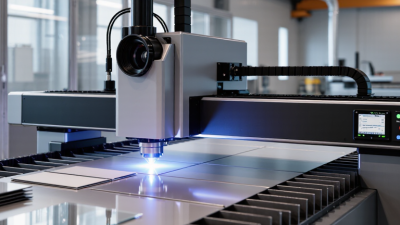
Laser cutting uses a focused beam of light to separate material along a programmed path. A digital drawing guides a computer-controlled cutting head across a sheet or workpiece. The beam heats a small area until the material melts, vaporizes, or burns away. Assist gas, often compressed air, nitrogen, or oxygen, clears molten material from the cut. That matters. The result is a narrow kerf, though its width varies with material and settings.

A typical job starts with a CAD file, which is checked for dimensions and converted into machine instructions. The operator selects settings such as power, speed, focus, and gas pressure. Then the cutting head follows the programmed outline. Small holes and sharp corners may need slower movement to keep edges clean. Good setup helps. A test cut can reveal whether the beam is drifting or leaving excess residue.

Results depend on material type, thickness, surface condition, and machine calibration. Thin sheet often cuts quickly, while thicker stock may need slower passes or a different process. The cut edge can show slight discoloration or heat effects, especially on sensitive materials. There is a catch. A fast cut is not always a better cut. Operators should inspect sample edges and adjust settings rather than assume one recipe works for every job.

Which Materials and Products Laser Cutting Can Handle

Laser cutting handles more than sheet steel. Fiber lasers commonly cut carbon steel, stainless steel, aluminum, brass, and copper; the right power and setup depend on thickness and finish. A fabricator might cut 2-millimeter stainless into control-panel openings, then produce matching brackets from the same sheet. Grand View Research estimated the global laser-cutting-machine market at about $5.8 billion in 2023, reflecting broad industrial use.

CO2 systems can process acrylic, plywood, paper, leather, and many textiles. Typical outputs include display panels, packaging prototypes, cabinet parts, gaskets, and fabric patterns. The cut is narrow, so small lettering and tight contours are often practical. Still, material composition matters. Some plastics release hazardous fumes when heated, and reflective metals may need specialized equipment and settings. Do not assume a material is safe because it looks familiar.

Material thickness, coatings, moisture, and machine settings all affect edge quality. ISO 9013 provides quality classifications for thermal cuts, a useful reference when specifying tolerances with a supplier. That sounds straightforward; it isn’t always. Ask for a sample cut using the actual grade and thickness, then inspect the edge, kerf, and fit. Laser cutting suits many jobs, but it does not make every material or product an economical choice.

How Laser Cutting Improves Precision, Speed, and Design Flexibility

Why Choose Laser Cutting for Your Business?

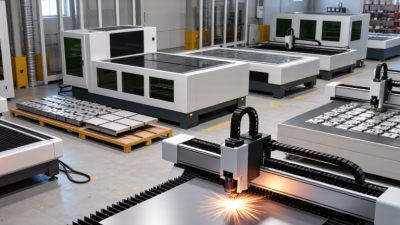
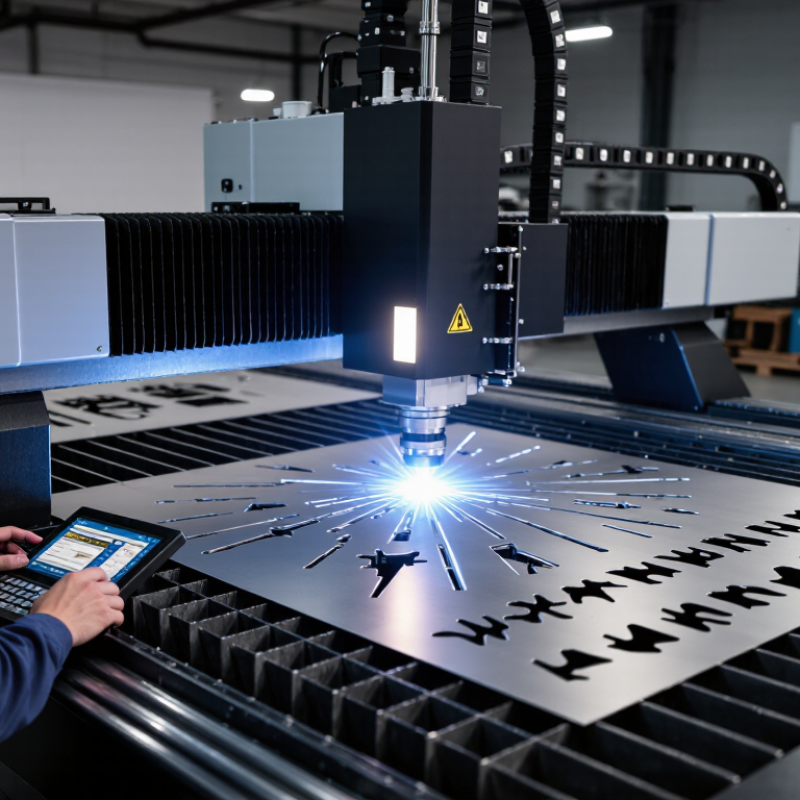
Laser cutting translates a digital drawing into a controlled beam path, producing clean edges and repeatable parts. On a sheet of stainless steel, a narrow slot can sit close to neighboring features without a conventional blade pushing the material aside. That repeatability matters. Results still depend on material thickness, focus, machine calibration, and cutting settings. A small test piece can reveal whether a fine opening will stay true or close slightly from heat.

Speed comes from more than the beam itself. Once a drawing is checked and the sheet is positioned, the machine can move directly between shapes without changing cutting tools. Nesting parts closely can reduce offcuts, while automated movement helps keep repeat orders consistent. Small jobs may still take time to program and set up. Sharp corners or heat-sensitive materials can also need slower settings, cleaning, or deburring afterward.

Design flexibility is another practical advantage. Teams can create narrow slots, curved profiles, mounting holes, and detailed cutouts in the same sheet. That makes it easier to revise a bracket after a prototype reveals an awkward cable route or a screw that sits too close to an edge. Still, not every intricate feature is worth keeping; very tight gaps may distort or collect heat. A sensible design leaves room for the material and process to behave imperfectly.

What Cost and Efficiency Benefits Laser Cutting Offers Businesses

Laser cutting can reduce the cost of making a part by using one programmed process for many shapes and thicknesses. A tightly nested sheet may leave fewer narrow offcuts than manual layout, while a precise cut can reduce filing or edge cleanup. There is less dedicated tooling to buy and store. For a small batch, that flexibility matters.

The efficiency gain depends on the whole shop, not just the laser. Deloitte and the Manufacturing Institute’s 2019 Smart Factory study reported that surveyed manufacturers expected 10–20% higher production output, 7–20% greater workforce productivity, and 10–15% more unlocked capacity from smart-factory initiatives. Those figures are not laser-cutting results. They are a useful benchmark for connected operations, where accurate job files, material planning, and machine monitoring help prevent idle time.

Track scrap, setup minutes, energy use, and rework before comparing costs. A sheet can be cut quickly, yet poor nesting or frequent changes can erase the savings. That happens. Assist gas, lens upkeep, extraction filters, and operator training also belong in the calculation. A practical test is to run the same part mix through current and proposed workflows, then compare cost per accepted part—not just cutting speed. The first estimate may still be wrong; production varies, and real shops are rarely tidy.

How to Assess Whether Laser Cutting Fits Your Business Needs

Before choosing laser cutting, list the parts your business actually makes. Record material type, thickness, largest dimensions, edge requirements, and monthly quantities. A drawing may look simple, yet a narrow slot or small hole can demand tighter process control. Measure the finished part, not just the cut path. That matters.

Then compare the process with your production rhythm. Laser cutting can handle intricate profiles and quick design changes without a dedicated cutting die. It may suit short runs, prototypes, or repeated sheet-metal parts. But consider setup time, nesting efficiency, material waste, operator training, extraction, and maintenance. For thick stock or loose tolerances, another cutting method may cost less. Not always.

Ask for a sample cut using your actual material and thickness. Check edge discoloration, burrs, dimensional consistency, and how much finishing remains. Track the full cost per usable part, including scrap and downtime, rather than comparing machine speed alone. A fast cut can still create slow assembly. It is easy to focus on a clean edge and overlook handling time. In a busy shop, even a neat stack can conceal parts that need hand deburring.

Why Choose Laser Cutting for Your Business?

How to Assess Whether Laser Cutting Fits Your Business Needs

This chart shows whether each material is commonly laser-cuttable with an appropriate process—not a comparison of cutting speed or quality. Fiber lasers are commonly used for metals, while CO₂ lasers are commonly used for acrylic and approved plywood. Actual suitability depends on material grade, thickness, machine capability, and safety requirements. PVC is not recommended because laser processing can release hazardous, corrosive fumes.