



Top China Almacam Software Suppliers for Global Buyers?
Choosing the right China-based partner for almacam software requires more than comparing license prices. Global buyers need reliable implementation, compatible post-processors, and responsive technical support. A supplier may promise fast deployment, yet the real test appears on the shop floor. Can the system generate stable CNC code for your laser, plasma, or oxy-fuel machine? Can engineers adjust nesting rules when steel thickness changes? These details matter.
Industry reports show why this market deserves careful evaluation. Deloitte’s 2024 Smart Manufacturing Survey found that 86% of manufacturing leaders view smart manufacturing as a major competitiveness driver. Grand View Research also identifies sustained growth in the global computer-aided design market, supported by automation and digital production. These findings support stronger demand for integrated CAD/CAM workflows, including nesting, cutting optimization, and production data management. However, market growth does not guarantee supplier quality. It only raises the need for verification.
This guide examines leading Chinese distributors, resellers, and implementation partners serving global buyers. It considers authorization status, industry experience, machine compatibility, multilingual service, training, and after-sales response. A live demonstration should include a sample DXF file, a realistic material sheet, and an actual post-processor test. Ask for references from comparable factories. Check how licenses, updates, and customer data are handled. A polished demo is not proof of long-term value. Regional support gaps can still appear after installation. This guide may not capture every local difference, but it aims to make supplier comparisons more practical, transparent, and evidence-based.
Understanding Almacam Software and Its Industrial Applications
Understanding Almacam Software and Its Industrial Applications
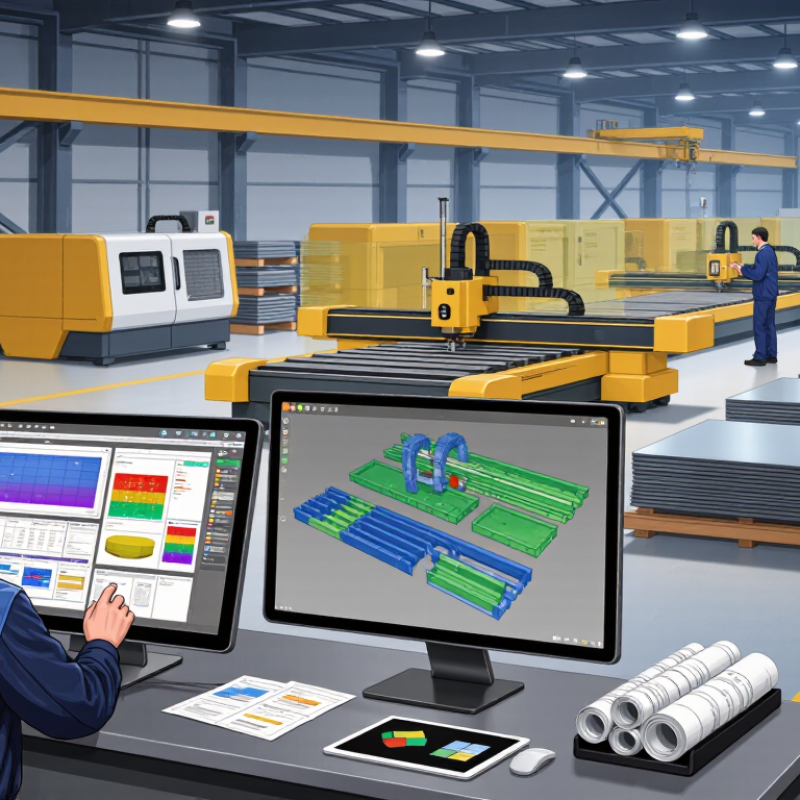
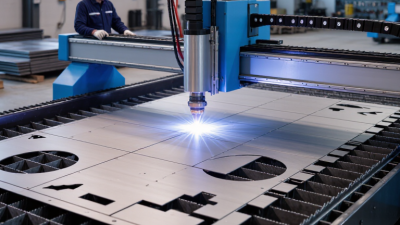
Almacam software connects digital drawings with industrial cutting and forming equipment. It supports CAD/CAM preparation, material nesting, toolpath creation, and production planning. In sheet-metal workshops, engineers can arrange parts on steel or aluminum sheets. This reduces unused material and limits repeated manual adjustments. A practical nesting screen may show hundreds of parts, sheet boundaries, cutting gaps, and tool directions.
Its applications cover laser cutting, plasma cutting, oxy-fuel processing, punching, and CNC machining. Operators can check thickness, kerf width, lead-ins, and collision risks before production. These checks matter when a small error could damage a sheet or delay delivery. The software also helps connect design files with machine instructions. However, automatic settings are not always correct. Material quality, machine age, and operator experience can change the final result.
For global buyers evaluating Chinese suppliers, technical support deserves close attention. A capable supplier should offer sample programming, machine compatibility checks, operator training, and clear revision control. Ask for a trial using your own drawings and production rules. Review nesting efficiency, processing time, and output accuracy. One overlooked issue is communication during software updates. A minor interface change may confuse a busy workshop. Reliable cooperation requires documented procedures, responsive engineers, and realistic claims rather than impressive demonstrations.
| Evaluation Dimension | Industry-Accurate Information | Typical Industrial Application | Expected Business Value | Global Buyer Verification Points |
|---|---|---|---|---|
| Core Software Function | CAD/CAM software converts 2D or 3D design data into manufacturing instructions for cutting, punching, routing, or other CNC operations. | Preparation of production programs for sheet-metal, textile, leather, furniture, composite, and general CNC manufacturing. | Reduces manual programming work and improves repeatability between design and production. | Confirm whether the required CAD/CAM modules are included in the quoted configuration rather than supplied as optional functions. |
| Sheet-Metal Cutting | Common functions include automatic or interactive nesting, contour processing, lead-in and lead-out definition, common-line cutting, and remnant management. | Laser, plasma, oxy-fuel, and waterjet cutting of carbon steel, stainless steel, aluminum, and other sheet materials. | Improves material utilization, supports consistent cutting quality, and helps reduce preparation time. | Request a test using the buyer’s actual part geometry, sheet sizes, material thicknesses, and machine configuration. |
| Nesting Performance | Nesting may be performed automatically or interactively, with constraints for grain direction, part rotation, spacing, quantities, and scrap areas. | Batch production where multiple part types must be arranged on standard or custom-sized sheets. | Potentially lowers scrap and improves machine utilization; actual savings depend on geometry, quantities, and nesting rules. | Compare nesting results using the same part list, sheet dimensions, spacing rules, and production priorities. |
| Machine-Interface Capability | Post-processors generate machine-specific NC programs. Output requirements vary according to controller, axis configuration, cutting head, tooling, and machine options. | Integration with CNC cutting tables, punching machines, routers, and other numerically controlled equipment. | Helps connect digital production planning with shop-floor execution. | Verify compatibility with the exact machine model, controller, post-processor version, axis arrangement, and safety procedures. |
| File Import and Export | Industrial workflows commonly use formats such as DXF, DWG, IGES, STEP, and machine-specific NC or G-code formats, subject to software and machine configuration. | Exchange of geometry between design departments, subcontractors, production sites, and inspection teams. | Supports data continuity and reduces re-entry of dimensions or contours. | Test real production files, including layers, splines, arcs, units, open contours, duplicate geometry, and imported 3D features. |
| Material and Process Database | Manufacturing databases may store material grades, thicknesses, cutting parameters, tooling data, feed rates, pierce settings, and technology rules. | Repeat production across different materials, thicknesses, machines, and operating conditions. | Improves standardization and reduces dependence on individual operator experience. | Ask whether database editing, approval workflows, backup, version control, and multilingual labels are available. |
| Industry Application: Metal Fabrication | Applicable workflows include profile cutting, plate processing, part nesting, remnant reuse, and CNC program generation. | Enclosures, brackets, structural components, machinery parts, electrical cabinets, and fabricated assemblies. | Supports higher production consistency for repetitive and mixed-batch work. | Evaluate edge-quality requirements, thermal distortion controls, remnant tracking, and post-processor accuracy. |
| Industry Application: Textile and Leather Cutting | Relevant functions can include piece nesting, material-grain control, marker planning, piece quantity management, and cutting-file preparation. | Garments, upholstery, footwear components, automotive interiors, and technical textiles. | Helps control material consumption and organize large numbers of irregularly shaped pieces. | Confirm support for material direction, defect zones, pattern grading, piece labels, and the buyer’s cutting equipment. |
| Industry Application: Wood and Composite Processing | CAM workflows may include nesting of panels or profiles, toolpath generation, drilling operations, routing, and machining-order definition. | Cabinet components, furniture panels, signage, insulation boards, and composite parts. | Can reduce setup effort and improve repeatability for panel-based production. | Check tooling libraries, vacuum-table requirements, spindle settings, collision avoidance, and dust-extraction considerations. |
| Automation and Batch Processing | Advanced systems may provide templates, rule-based processing, job queues, automatic nesting, barcode or label generation, and production-list handling. | High-volume factories with standardized products and frequent order changes. | Reduces repetitive data preparation and supports more predictable production scheduling. | Request a demonstration using actual order data and measure processing time, exception handling, and operator intervention. |
| Integration with Factory Systems | Integration may involve ERP, MES, product data management, barcode systems, production scheduling, and machine-monitoring platforms. | Multi-site manufacturing and digitally managed production environments. | Improves traceability from order entry and material planning to machine output. | Confirm available APIs, database connectivity, import/export automation, user permissions, and cybersecurity controls. |
| Training and Technical Support | Implementation normally requires operator training, post-processor setup, technology-table configuration, and production troubleshooting. | Factories adopting new CAM software or replacing manual programming methods. | Shortens the learning curve and helps achieve stable production results. | Review training language, support hours, response targets, remote-support methods, documentation, and local service coverage. |
| Customization Capability | Customization can include post-processors, user interfaces, production templates, naming rules, reports, labels, and workflow automation. | Manufacturers with non-standard machines, special cutting processes, or complex internal procedures. | Improves alignment between the software and existing factory practices. | Define customization scope, acceptance criteria, ownership of source files, update responsibilities, and change-control procedures. |
| Data Security and Deployment | Deployment options may include workstation installation, local servers, controlled network access, or vendor-managed cloud services, depending on the solution. | Factories requiring centralized data management or restricted access to production files. | Supports controlled access, backup planning, and protection of proprietary design data. | Check licensing model, offline operation, backup procedures, access control, audit trails, and data-location requirements. |
| Commercial Assessment | Total cost includes software licenses, modules, post-processors, implementation, training, maintenance, upgrades, and integration work. | Software procurement for single plants, export-oriented factories, or multi-site manufacturing groups. | Provides a more realistic comparison than evaluating the initial license price alone. | Request a five-year total-cost-of-ownership quotation with clearly separated one-time and recurring charges. |
Related Posts
-
Is Almacam Software a Top CNC Nesting Solution in 2026?
-

How to Maximize Your Efficiency with Almacam Software for Optimal Results
-

2026 Top Nesting Software Solutions for Global Buyers?
-
Best Welding Software for Efficient Production Management?
-
Top 10 Types of Water Jet Cutting Machines?
-
How to Choose CAD CAM Software for Plasma Cutting